

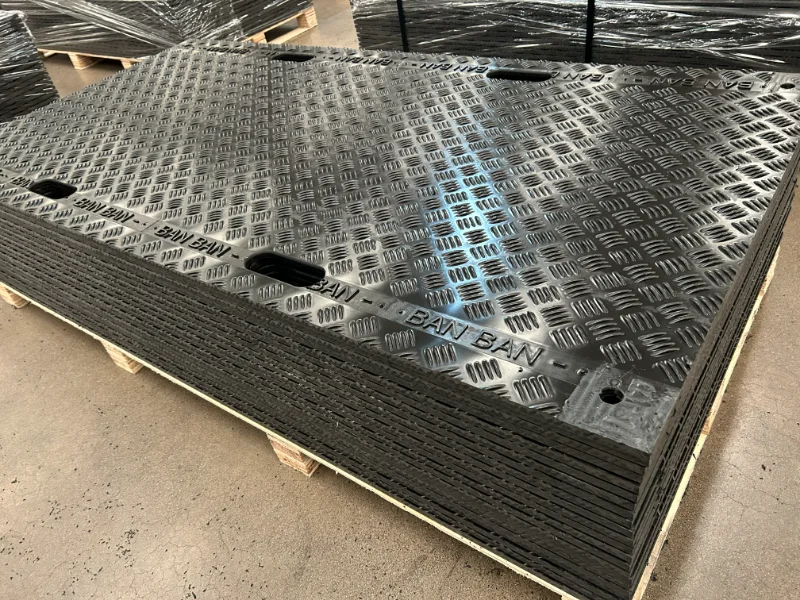
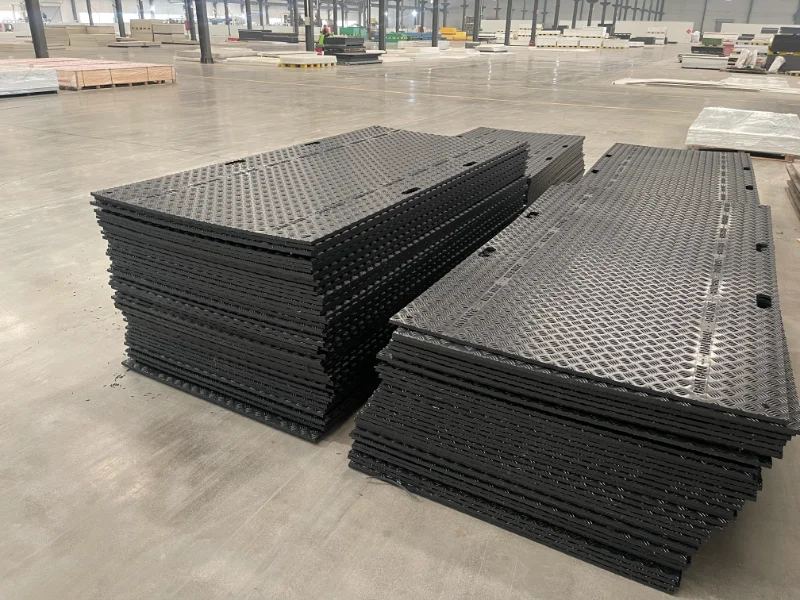
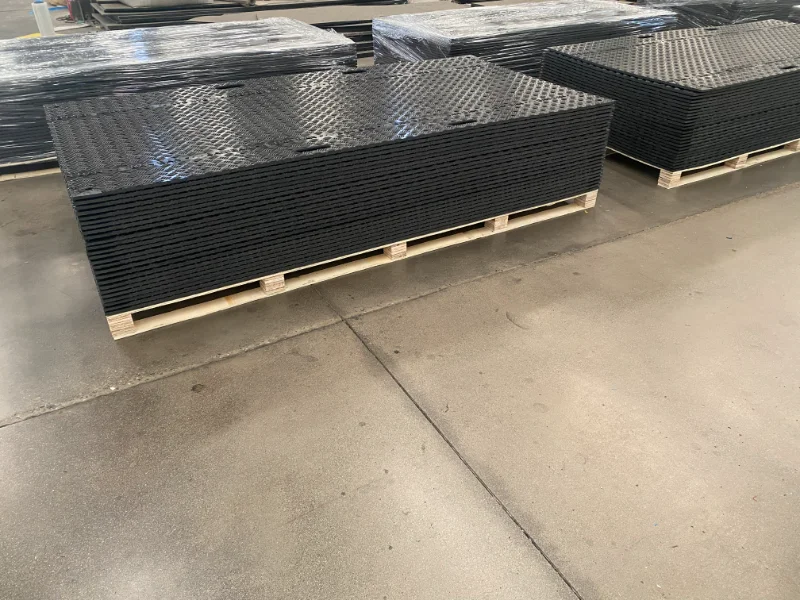
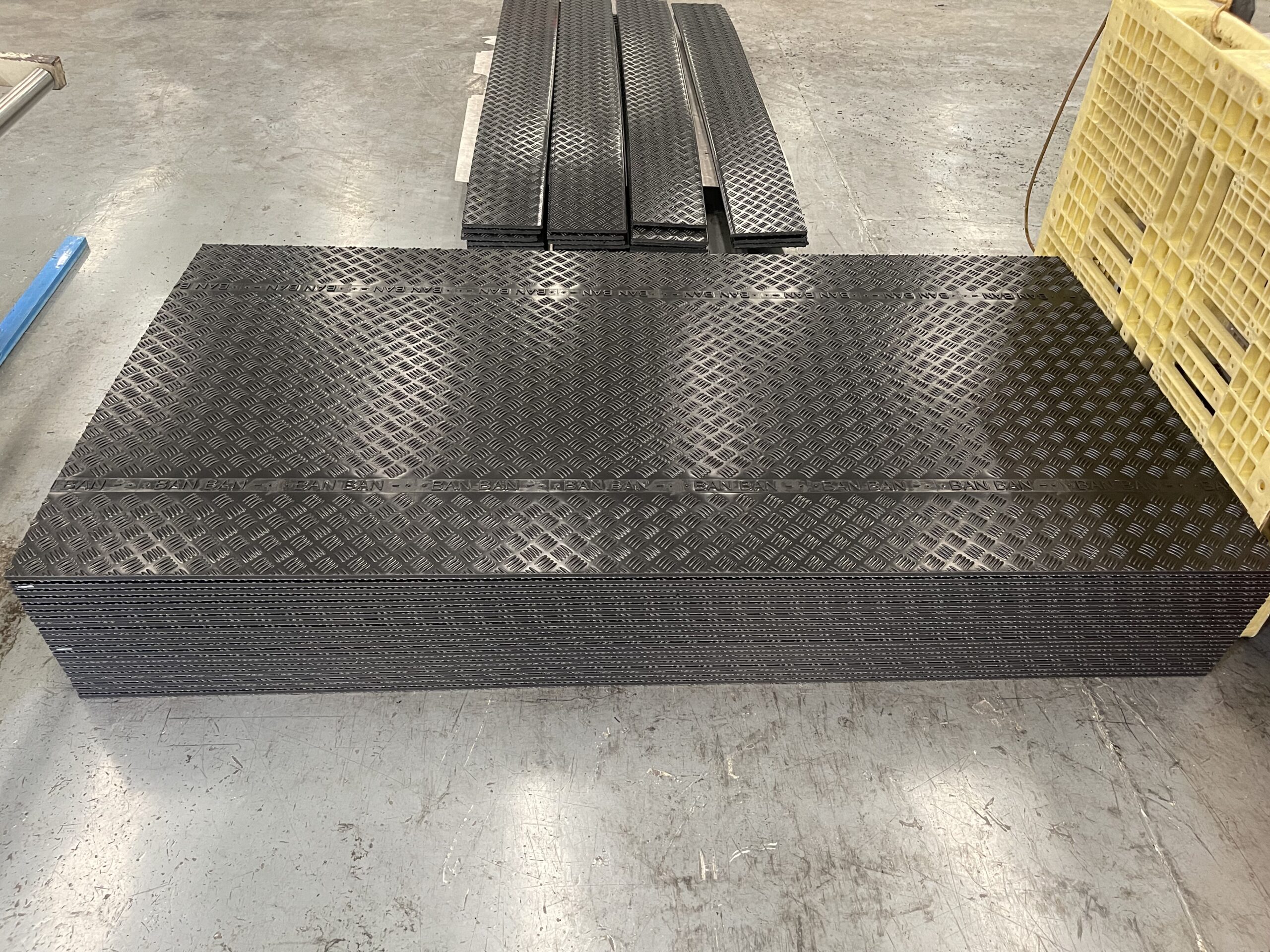
HDPE road mats, also called HDPE ground protection mats, are used to create temporary access routes and working surfaces while reducing direct contact between traffic and soft or finished ground.
A successful route is a system: vehicle loads, soil support, moisture, panel stiffness, joints, edge transitions, slope and driving behavior all interact. Zhihong Plastic quotes panels and processing against the project information supplied; the site owner or project engineer approves the installed system.
Select the Complete Temporary Access System
Start with the operating envelope rather than choosing a mat from thickness alone:
- Vehicle: gross weight, maximum axle and wheel load, tire size or track contact area, and whether the machine has sharp grousers.
- Movement: straight travel, turning, braking, acceleration, static parking, outrigger use and expected number of passes.
- Ground: soil type or verified bearing data, moisture, rutting, slope, buried services, voids and the sensitivity of grass or finished paving.
- Route: length, width, passing areas, curves, edge transitions, drainage and connection or anchoring method.
- Operation: vehicle speed, inspection frequency, cleaning, panel handling and the action to take if movement or pumping appears.
Load Capacity Depends on Vehicle and Ground
A single “tons per mat” figure is not enough to design a route. The same panel can behave differently over firm gravel, saturated clay, loose sand or a concealed void. Wheel and track contact pressure, dynamic effects, turns and repeated passes can be more important than gross vehicle weight.
Provide the load distribution and ground information so the purchaser’s engineer can assess support, panel layout and any separation or reinforcement layer. Standard road mats must not be used to bridge trenches, excavations or unsupported gaps. Crane outriggers and other concentrated point loads require a purpose-designed support system.
Traction and Surface Safety Must Be Verified
A molded or machined texture can change traction, but performance varies with tire, track or footwear, water, mud, oil, frost, direction, slope and wear. “Anti-slip” in a product name is not a substitute for a specified test and acceptance result.
For pedestrian access, public events or sloped routes, define the applicable traction, accessibility, edge and trip requirements. For vehicle routes, include braking and turning conditions and use suitable connectors or restraints. Test the final production construction under representative conditions when safety depends on the surface.
Applications and Important Limits
- temporary access for construction, utility and maintenance vehicles;
- ground protection over grass, landscaped areas or finished surfaces;
- work zones around pumps, generators and temporary equipment;
- event access routes after pedestrian and accessibility requirements are reviewed;
- short-term site routes where panels can be inspected and repositioned as conditions change.
Tracked machines require special review. Grousers, counter-rotation and tight turns can cut or displace a polymer surface. A thicker panel alone does not resolve every track, subgrade or connection issue.
For equipment covers, liners or fabricated flat panels rather than ground access, use the separate textured HDPE panel product.
Route Layout, Connections and Installation
- inspect and prepare the route; remove sharp debris and identify weak areas, slopes and buried hazards;
- use a separation, drainage or reinforcement layer when the project design requires it;
- lay panels in the specified orientation and connect or restrain them against traffic forces;
- provide edge ramps or transitions suitable for the vehicle and pedestrian use;
- control speed, braking and turning according to the route plan;
- stop traffic and correct the route if panels separate, lift, pump, sink or expose a trip edge.
The installation method should be documented for the crew, including connection checks, weather limits, inspection frequency and removal procedure.
Handling, Cleaning and Reuse
Panel size and weight must match the intended handling method. State whether crews will move panels manually or with lifting equipment, and identify any handle, lifting-hole or stacking requirement. Edges and connectors should be inspected before each deployment.
Remove mud, oil and debris using a method compatible with the selected HDPE grade. Reuse depends on surface wear, flatness, damage around holes and connectors, and the next site condition. “Recyclable” does not prove recycled content or guarantee local recycling; request the material declaration needed for the project.
What to Send for an Accurate Quotation
For an initial quotation, send the vehicle type and loads, ground condition, route dimensions, quantity and destination. For technical review, include:
- maximum axle/wheel load or track pressure and contact dimensions;
- turning, braking, parking, pass count and any concentrated load;
- soil or surface description, moisture, slope and available bearing data;
- route plan, panel orientation, connectors, edge transitions and drainage;
- required panel size, texture, holes, handles, marking or drawing-based features;
- traction or other test requirement and documents;
- packing, unloading method, delivery location and target date.
Our quotation will state the available panel construction, processing scope, connectors, sample or trial requirement, MOQ, lead time, packing and document basis.
Order-Specific Quality Checks
The approved order should identify the material, panel dimensions, surface pattern, connection features, drawing revision and inspection method. Depending on the scope, checks can cover thickness and size, flatness, texture, hole position, connector fit, visible defects, quantity, identification and packing.
Frequently Asked Questions
What load can an HDPE road mat carry?
There is no universal project capacity based on material or thickness alone. Vehicle contact loads, ground support, route layout, joints, dynamic movement and acceptance criteria must be reviewed together.
Can road mats be used with tracked machines?
Only after the track, grouser, contact pressure, turning behavior, subgrade and panel construction are assessed. Tight turns and sharp grousers can damage or move panels.
Are textured mats slip-resistant in mud or rain?
Do not assume so. Mud, water, oil, frost, slope and wear alter traction. Specify the test condition and evaluate the final construction where a safety result is required.
Can the mats bridge a trench or soft void?
No standard road panel should be used as an unsupported bridge. Use a purpose-designed structure approved for the span and load.
Are the panels made from recycled material?
That depends on the ordered formulation and traceability requirement. State whether virgin resin, controlled recycled content or a specific declaration is required; do not infer composition from recyclability.
Request an HDPE Road Mat Quotation
Review the ground protection panel range, or send the vehicle loads, ground condition, route plan, quantity and destination. Zhihong Plastic will reply with the available panel, processing, connection and commercial options for project approval.
