

HDPE Ground Protection Mats: Product Video
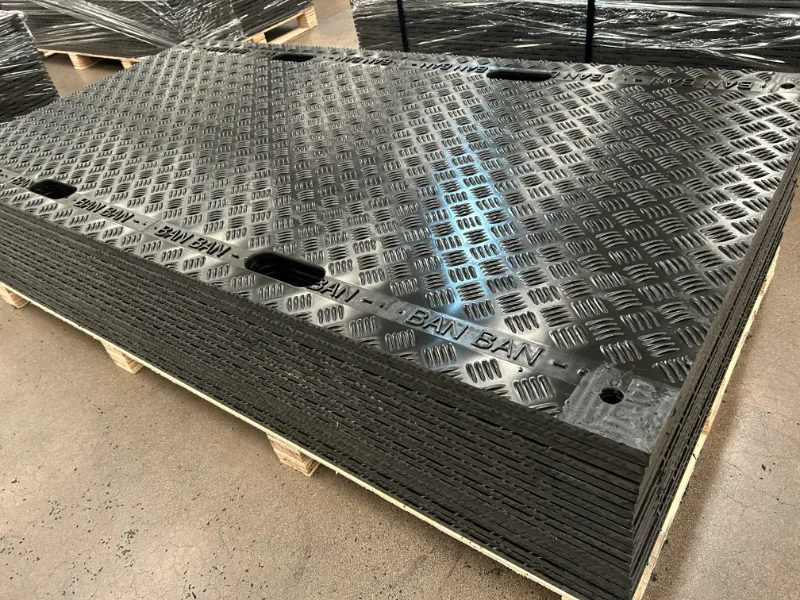
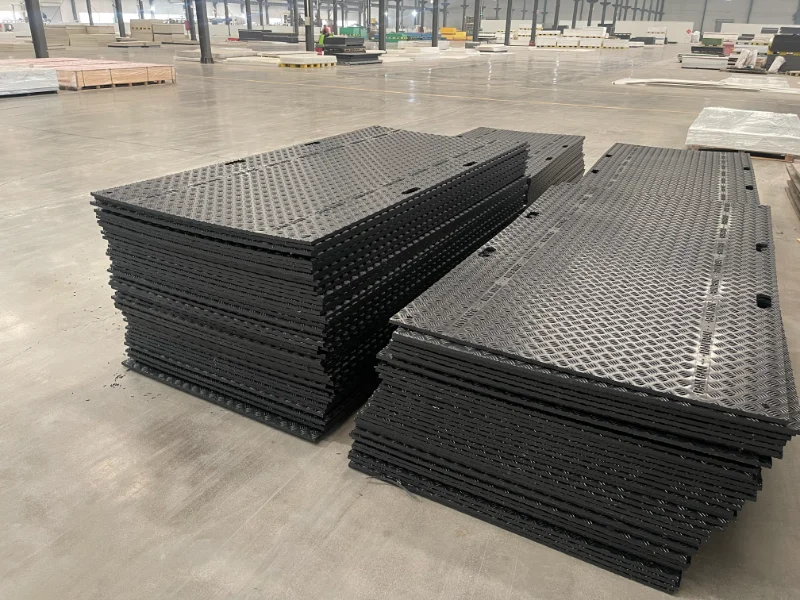
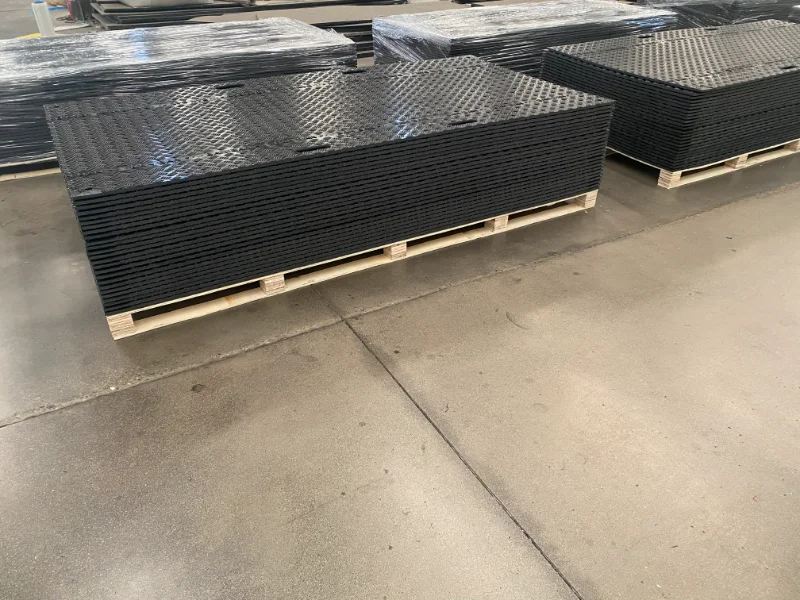
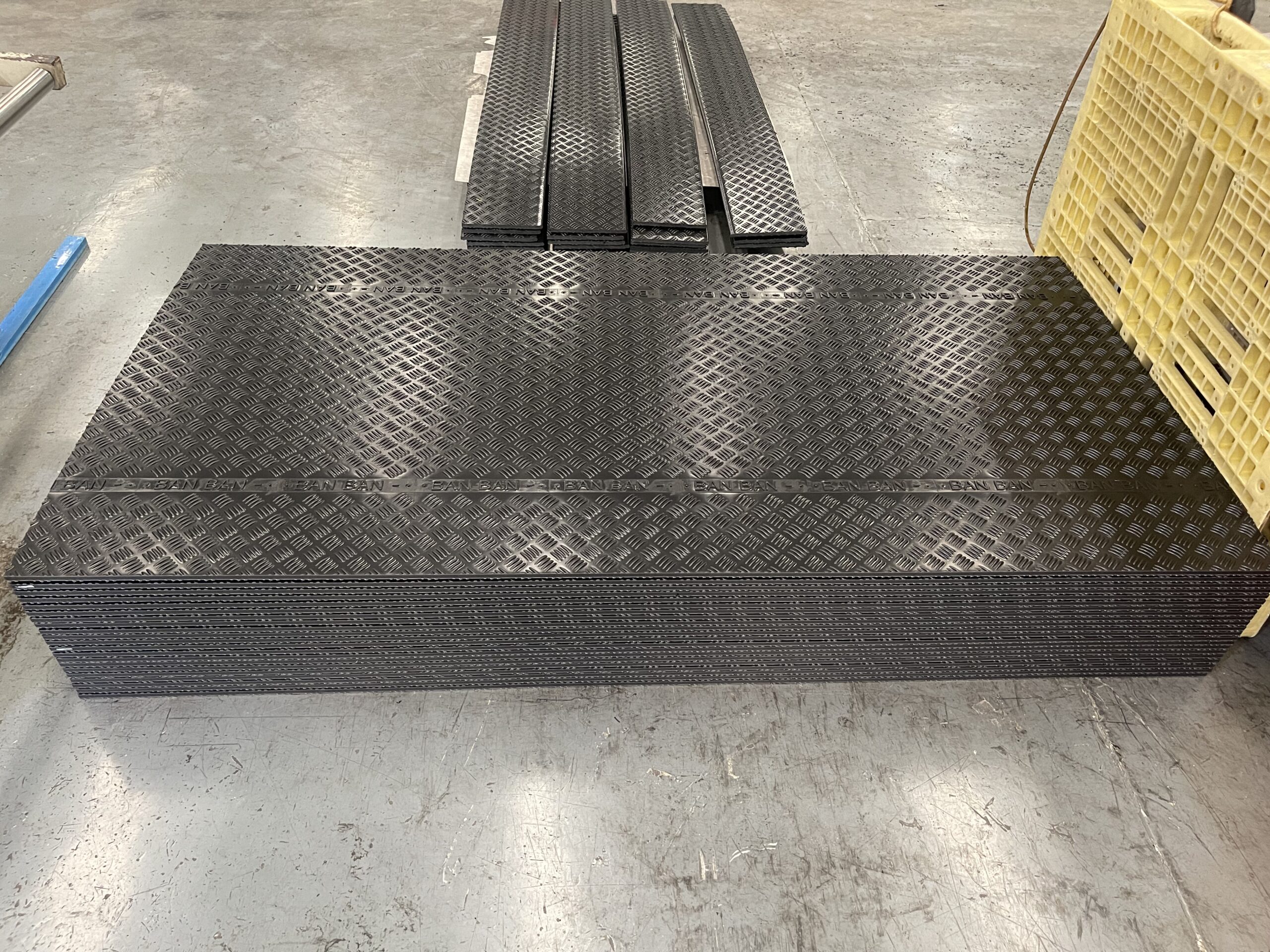
Factory footage showing textured mats, CNC machining and stacked panels at Zhihong Plastic.
HDPE road mats, also called HDPE ground protection mats, are panels for temporary vehicle access and work areas over grass, soil or finished surfaces. Zhihong Plastic can quote panel dimensions, surface patterns, holes and handling features against the order specification. The proposed mat and route still need to suit the vehicle loads and ground support.
Send the vehicle loads, ground conditions and route plan for a panel and machining quotation. The project engineer or responsible site team must assess the complete route, including ground support, panel arrangement and connections. A material description or panel quotation is not approval of the installed access system.
Specify the HDPE Mat and Temporary Access Route Together
- Vehicle data: gross weight, maximum axle and wheel loads, tire contact dimensions or track contact area, and the track shoe or grouser type.
- Traffic conditions: straight travel, turning, braking, acceleration, parking and expected number of passes. Identify crane outrigger or other concentrated loads separately; a road mat is not an outrigger pad.
- Ground information: soil type or verified bearing data, moisture, existing ruts, slope, buried services, possible voids and the sensitivity of grass or finished paving.
- Route design: length, width, passing areas, curves, edge transitions, drainage and the proposed connection or restraint system.
- Site requirements: operating limits, inspection frequency, cleaning, handling and the acceptance criteria for the installed route. These belong in the site-approved plan.
HDPE Road Mat Load Capacity Depends on Ground Support
There is no universal load capacity based on HDPE or mat thickness alone. Wheel or track contact loads, ground bearing conditions, panel construction, connections and traffic pattern all matter. A rating established on firm ground cannot be applied unchanged to wet clay, loose sand or an unsupported area. The project assessment also needs to account for turning, braking and repeated passes.
Standard ground protection mats need support from the ground beneath them. They are not trench bridges or crane outrigger pads. Unsupported spans and concentrated equipment loads require separate engineering and a support system designed for that use.
Specify Traction Requirements for the HDPE Mat Surface
A surface pattern can affect grip, but texture alone does not establish slip resistance. Mud, water, oil, frost and wear can change performance. Provide the vehicle or footwear, slope and expected surface conditions so the pattern, any required test and the acceptance criteria can be agreed for the proposed mat.
Pedestrian access requires a review of edge transitions, trip hazards and applicable accessibility requirements. For vehicle access, connections and restraints must be assessed against the expected traffic forces. These are route-design requirements for the project engineer or responsible site team, not performance guarantees from a textured panel.
HDPE Ground Protection Mat Applications and Limits
- temporary access for construction, utility and maintenance vehicles, subject to project assessment;
- surface protection over grass, landscaped areas or finished paving;
- temporary work or staging areas for equipment, with the loads and support requirements identified;
- event access routes with pedestrian and accessibility requirements included in the design;
- short-term site routes with an agreed inspection plan for changing ground and weather conditions.
For tracked machines, include the track construction, contact pressure and expected turning behavior in the inquiry. Sharp track shoes and pivot turns can damage or displace plastic panels. Increasing thickness alone does not resolve every track, ground-support or connection issue.
Equipment covers, liners and fabricated flat panels are different applications from temporary ground access. For those uses, specify a textured HDPE panel suited to the part and its service conditions. View the separate textured HDPE panel product.
Site-Approved Route Design for HDPE Road Mats
- Route assessment: the design needs to address ground condition, weak areas, slopes, buried services, debris and other site hazards.
- Ground support: the project engineer determines whether separation, drainage, reinforcement or another support measure is required. The mat specification alone does not make that decision.
- Panel arrangement: the approved design must identify orientation, connections and restraints for the proposed panels and expected traffic forces.
- Edge transitions: the design needs to address vehicle entry and exit, pedestrian routes and any applicable accessibility requirements.
- Traffic limits: the site-approved plan defines permitted vehicles and conditions, including speed limits, braking, turning and weather-related restrictions.
- Inspection and acceptance: the plan defines inspection frequency, acceptance criteria and responsibility for reviewing panel separation, lifting, sinking, ground movement or exposed trip edges.
HDPE Mat Handling, Cleaning and Reuse Requirements
State whether panels will be handled manually or with lifting equipment. Dimensions, panel weight, hand holes, lifting features and stacking arrangements need to match the intended handling method. The site plan should also address cleaning compatibility and inspection of edges, holes and connectors before another deployment.
Reuse depends on the panel condition and the next site's requirements; it is not a fixed service-life promise. If the project specifies virgin resin, controlled recycled content or a material declaration, include that requirement in the order. Recyclability does not prove recycled content or identify the supplied formulation.
HDPE Road Mat Details for a Quotation
For an initial quotation, send the vehicle type and loads, ground conditions, route dimensions, quantity and destination. The following details help define the panel and processing scope:
- maximum axle or wheel loads, or track pressure, with contact dimensions;
- turning, braking, parking, expected pass count and any concentrated loads requiring separate support;
- soil or surface description, moisture, slope and available ground bearing data;
- project route plan, panel orientation, connection details, edge transitions and drainage requirements;
- panel dimensions, surface pattern, holes, handling features, identification marks or a drawing for custom machining;
- required traction or other test method, conditions, acceptance criteria and supporting documents;
- packing requirements, unloading method, delivery location and target date.
The quotation confirms the available panel construction, machining scope, connection options, quantity, minimum order quantity, lead time and packing. Samples, trials and any required documents must be agreed for the order. Supply confirmation does not replace the project's route-design assessment.
Order-Specific Inspection of HDPE Road Mats
Agree the material, panel dimensions and tolerances, surface pattern, hole positions, connection details, drawing revision and inspection records in the purchase order. Depending on the supply scope, checks can cover size, thickness, flatness, visible condition, connector fit, quantity, identification and packing. Dimensional inspection is not a site load-capacity assessment or a traction test.
HDPE Ground Protection Mat Questions
What load can an HDPE road mat carry?
Capacity must be assessed for the vehicle contact loads, ground support and proposed route. Send axle or track loads, contact dimensions, ground information and the route plan. A generic tonnage figure or mat thickness alone does not establish a project capacity.
Can HDPE road mats be used with tracked machines?
Tracked-machine use requires a project assessment of track shoes or grousers, contact pressure, turning behavior, ground support and panel construction. Sharp grousers and tight turns can damage or move panels, so suitability cannot be assumed from the HDPE material name.
Are textured HDPE mats slip-resistant in mud or rain?
Texture alone does not establish slip resistance in those conditions. Mud, water, oil, frost, slope and wear can alter traction. Where performance must be demonstrated, agree a relevant test and acceptance criteria for the supplied construction and representative conditions.
Can HDPE road mats bridge a trench or void?
Standard ground protection mats are not unsupported bridges. A trench or void requires a separately engineered structure for the span and loads. Do not treat a mat's ground-supported load rating as a bridge rating.
Are HDPE road mats made from recycled material?
Composition depends on the ordered formulation and traceability requirements. State whether virgin resin, controlled recycled content or a specific material declaration is needed. Recyclability alone does not establish the composition of the supplied mats.
Request an HDPE Road Mat Quotation
Send the vehicle loads, ground conditions, route plan, panel requirements, quantity and destination. Zhihong Plastic will review the available panel, machining and connection options and confirm the commercial terms in the quotation. The project engineer or responsible site team retains approval of the installed route. View the HDPE ground protection panel range. Send your HDPE road mat quotation request.
