Match PP properties to the component's duty
Polypropylene (PP) sheet combines low weight, low water absorption and useful chemical resistance. The trade-offs matter: a stiff homopolymer grade can lose toughness in cold conditions, and a panel that looks flat when unloaded may deflect under sustained load. We assess the properties that affect the proposed component, not one generic PP performance grade.

An injection, fiber or molding grade describes a resin's processing purpose; it is not a finished-sheet specification. Identify the polymer type, formulation and sheet-production method for the panel being offered. Our PP sheet grade comparison explains how base polymers and modifications differ.
Separate low weight from stiffness and load capacity
Unfilled PP's relatively low density helps with handling covers, trays and fabricated panels. Weight still depends on thickness, dimensions and any reinforcement. A light panel is not automatically strong enough for an unsupported span, a liquid load or a concentrated load at a fixing.
Tensile modulus describes stiffness under stated test conditions; yield stress describes a different part of the material's response. Neither is a finished-panel load rating. For sustained loading, consider creep, temperature, support spacing and local stress around holes, not just the largest strength value in a catalog.
Check impact and repeated flexing separately
Common PP homopolymers favor stiffness, while impact copolymers can offer greater toughness, particularly in colder conditions. Compare the offered grade at the lowest service temperature. Notched and unnotched impact results are not interchangeable, and a result for a laboratory specimen does not approve a guard with sharp corners or damaged edges.
PP's use in molded living hinges does not establish the bending life of a thick sheet or machined joint. For repeated flexing, define the section, bend radius, movement and required cycles. Assess the chosen sheet in that geometry instead of transferring an unsupported cycle count from another product.
Assess chemical resistance in the actual environment
PP is used in contact with many aqueous salts, acids and alkalis, but an acid-resistant label is too broad for selection. Identify each chemical, its concentration, temperature and contact duration. Include solvents, oxidizers and cleaning mixtures; compatibility with the main process liquid does not settle every exposure.
Swelling, property changes and mechanical stress can matter even when the surface appears intact. Resistance charts need their temperature and test assumptions. For tank walls, ducts and process trays, our PP chemical-equipment design guide connects material compatibility with supports, joints and component duty.
Allow for water exposure and thermal movement
PP absorbs little water, which is useful in wet-service panels. That does not mean the finished part stays dimensionally unchanged: heating, sustained load and residual stresses from production or fabrication can affect shape. A close-fitting panel needs room to move without forcing its edges or fasteners.
Melting point and softening data do not establish a loaded part's working temperature. Repeated hot cleaning or steam exposure also requires grade- and cycle-specific evidence. Our PP sheet service-temperature guide explains the distinction between thermal test results and allowable service conditions.
Use sheet-specific data for cutting and joining
Use sharp tools, effective chip removal and clamping suited to PP to limit heating and distortion. Large pockets, thin sections or uneven stock removal can affect flatness. Check dimensions that control fit under agreed temperature and measurement conditions.
Use compatible sheet and welding material, appropriate joint preparation and a procedure for the duty. Conventional adhesive bonding is difficult because PP has low surface energy. Assess any proposed adhesive and surface preparation with the actual joint geometry and exposure.
Distinguish appearance from a special formulation
Color and surface finish describe appearance, not a performance class. A black or gray sheet is not automatically UV-stabilized; outdoor use needs evidence for the formulation and exposure. Flame retardancy is also a separate requirement, tied to the stated test, classification and specimen conditions.
Ordinary unmodified PP is electrically insulating, but antistatic or conductive formulations behave differently. Food contact likewise needs documentation for the offered grade and intended conditions, not a general non-toxic description. Do not infer either requirement from color, resin-family name or a photograph.
Compare the offered sheet and a representative part
Keep each property value connected to its grade, test method, specimen preparation and conditioning. A molded resin specimen and a sample cut from sheet may not be directly comparable. Typical data help shortlist materials; they should not be presented as guaranteed batch limits unless those limits are agreed.
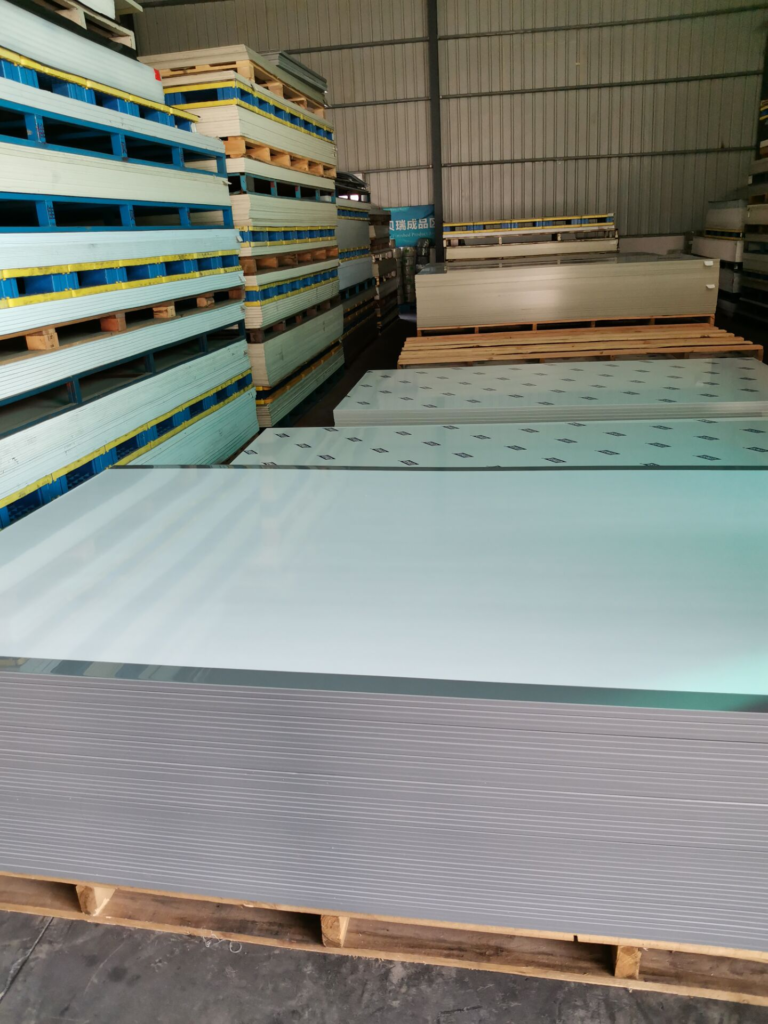
For a cover, machined fitting or fabricated panel, a representative sample can reveal fit, edge condition and deflection that material data alone cannot show. When discussing a PP part with us, explain the limiting duty and the features that need acceptance checks. We can review the proposed sheet and fabrication scope against your drawing and conditions. Keep the selected grade and agreed checks in the component specification.