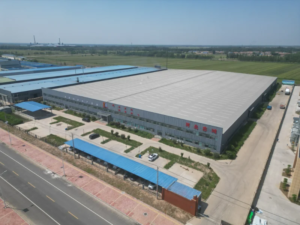
Plastic products have long become an essential part of our lives. However, many people may not fully realize the wide variety of plastic products available. Today, zhihong Plastic Products Custom Manufacturer is here to give you an introduction!
Rubber, which is often mistakenly grouped with plastics, can be divided into natural rubber and synthetic rubber.
Natural rubber mainly comes from the Hevea brasiliensis tree. When the bark of this tree is cut, it secretes a milky white liquid called latex, which is collected and then processed—through coagulation, washing, molding, and drying—into natural rubber.
Synthetic rubber is man-made and produced from various monomers. Different raw materials can be used to synthesize different types of rubber. Between 1900 and 1910, chemist C.D. Harris determined that the structure of natural rubber was a polymer of isoprene, paving the way for artificial rubber synthesis. In 1910, Russian chemist S.V. Lebedev used metallic sodium as an initiator to polymerize 1,3-butadiene and successfully produced sodium-butadiene rubber. Since then, many other synthetic rubbers have emerged, including polybutadiene rubber, neoprene rubber, and styrene-butadiene rubber (SBR). Today, the production of synthetic rubber has far exceeded that of natural rubber, with SBR being the most widely produced type.
Applications of Rubber Include:
- Tires and general industrial rubber goods: General-purpose rubber has high demand and forms the majority of synthetic rubber usage.
- Rubber shoes: Polybutadiene rubber is commonly used, though it has relatively poor tear and wet-slip resistance.
- Ethylene-propylene rubber (EPDM): Offers oil resistance similar to SBR. Widely used in tire sidewalls, seals, inner tubes, auto parts, cable insulation, and high-voltage insulation. It is also used in light-colored products like rubber shoes and sanitary goods.
- Rubber hoses, gaskets, and linings for chemical-resistant equipment.
Structural Characteristics of Vulcanized Rubber:
- High Molecular Weight: In its natural state, rubber exists as coiled molecular chains. When external force is applied and then removed, the chains recoil, creating elasticity—this is the source of rubber’s high elasticity.
- Branched Chain Structure: Excessive branching during processing leads to the formation of gel-like regions, which adversely affect performance and uniformity. During compounding, additives may fail to disperse in these areas, creating weak spots in the final product.
- Crosslinked Structure: Vulcanization causes linear polymer chains to link via atoms or groups into a three-dimensional network. As vulcanization progresses, crosslinking density increases, reducing plasticity and elongation while increasing strength, elasticity, and hardness. Compression set and swelling rate decrease correspondingly.
Bulk & Project Supply
- Custom options: thickness, size, color, cut-to-size and CNC machining (by request)
- Quality: stable batches, dimensional checks and surface inspection (records available)
- Packing: film protection, pallet/crate packing, export marking
Get a Factory Quote
Send your material, thickness, sheet size / drawing, quantity and destination. We will reply with MOQ, lead time and a factory quotation.