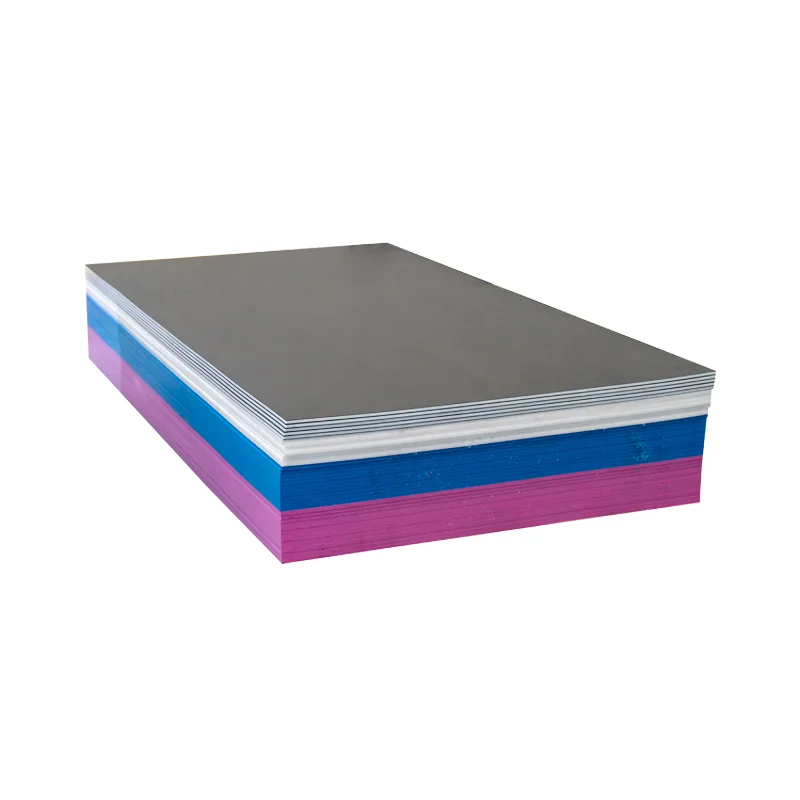
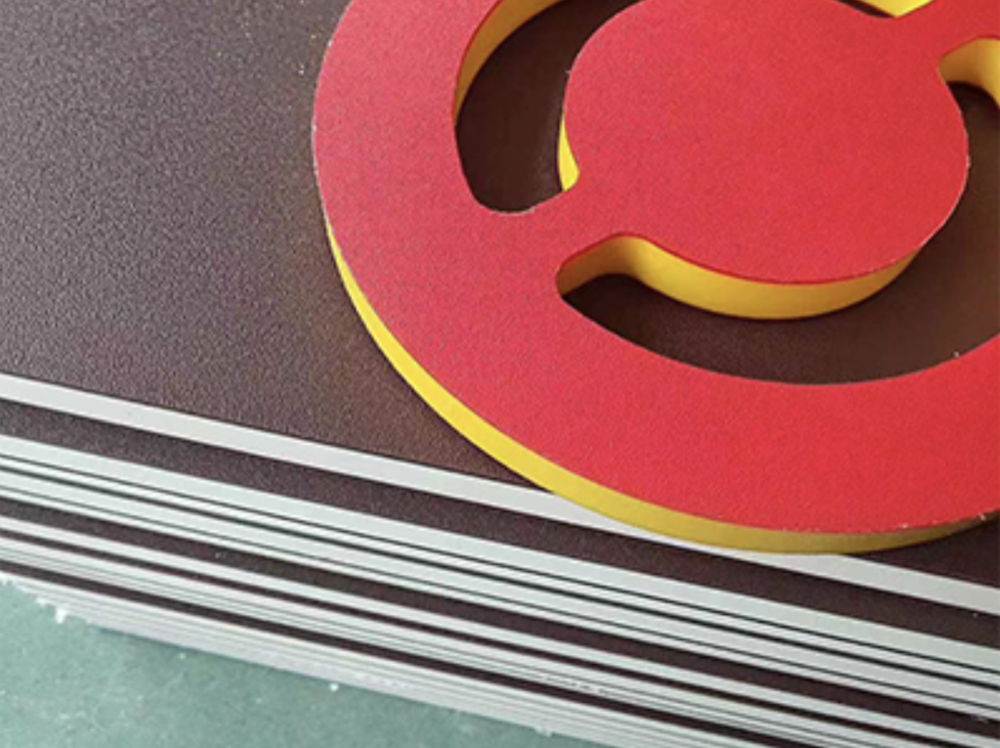
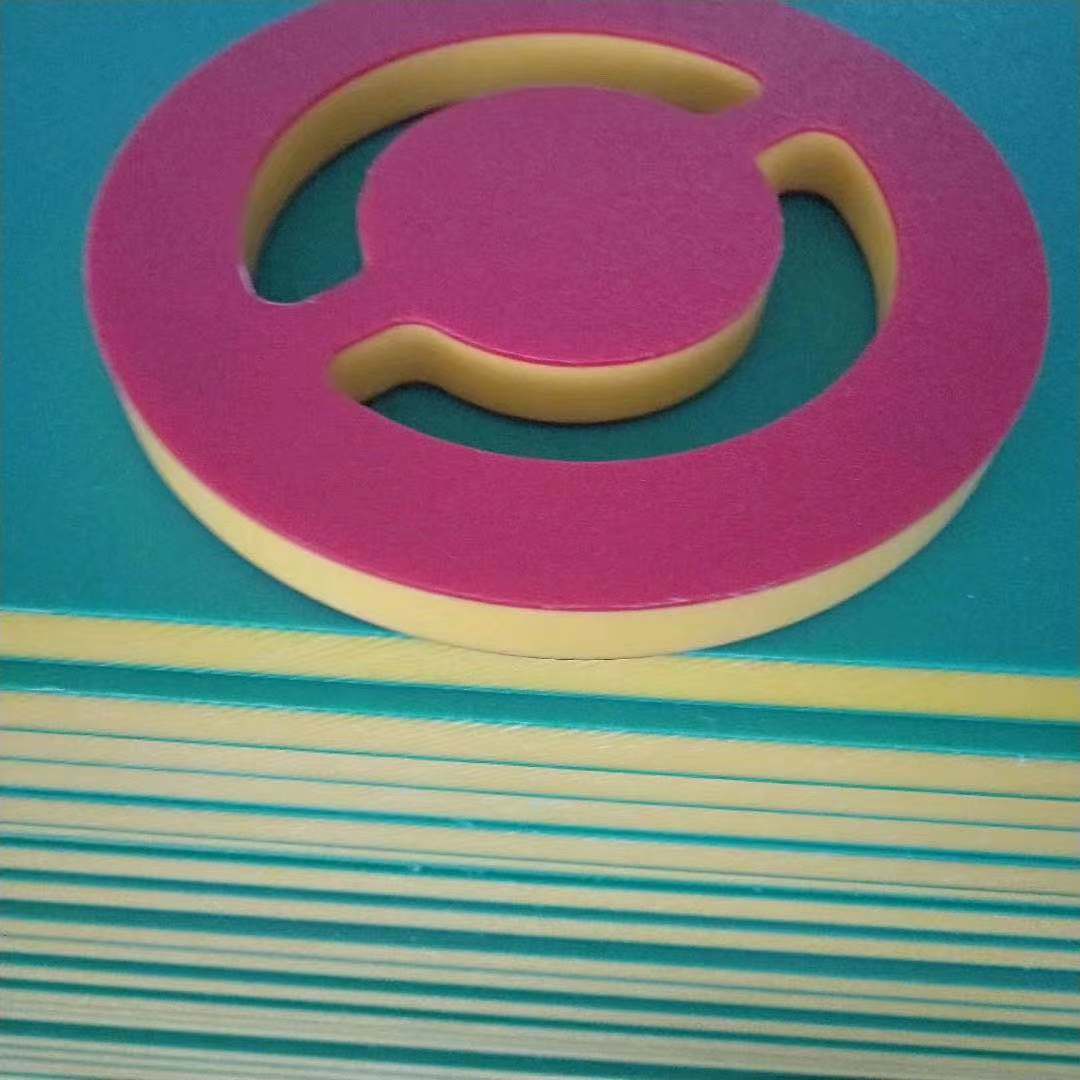
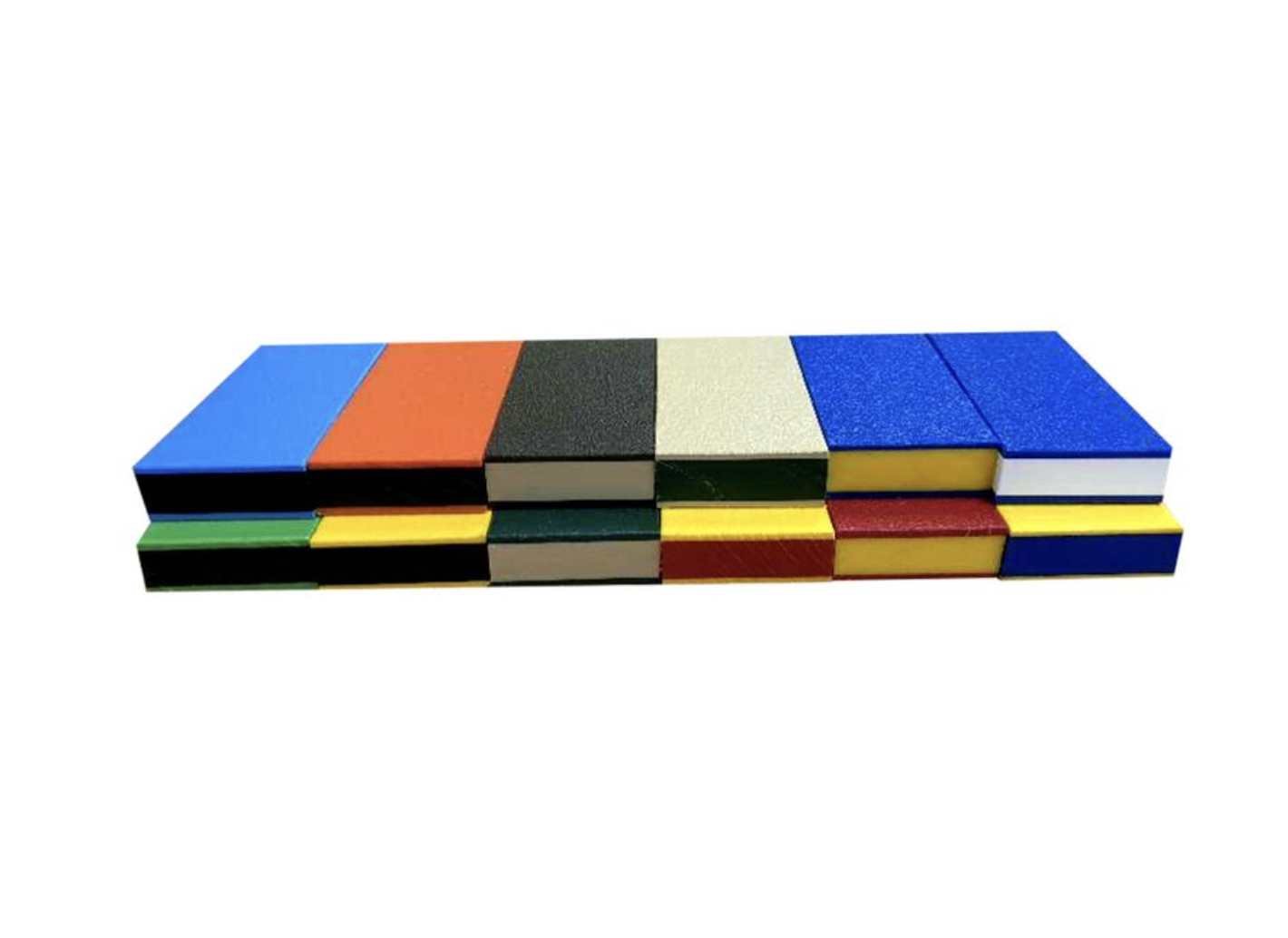

A colored two-tone HDPE sheet is a co-extruded, multi-layer panel with contrasting face and core colors. Routing through the face reveals the core as lettering, symbols or graphics, so the visual contrast comes from the sheet construction rather than paint filling or a printed overlay.
This page is for buyers who need to define the color architecture, appearance approval and repeat-order controls before purchasing. For cutter selection, engraving depth and finished sign machining, see our two-color HDPE engraving sheet page.
Zhihong Plastic can quote standard color combinations and review custom color programs. The approved quotation should record the face/core sequence, total thickness, surface, color reference, quantity, tolerances and required documents. A screen image is useful for discussion, but it should not be the sole approval reference when color is commercially important.
Define the Color Architecture Before Pricing
The following decisions determine how the blank sheet looks, what the router reveals and whether later orders can be reproduced on the same basis:
- Visible face and revealed core: state the color that remains on the panel face and the color that should appear after routing.
- One- or two-face construction: confirm whether one face or both faces need a contrasting routable layer. Do not assume that the two sides are identical.
- Layer arrangement: describe the required sequence from one face to the other. A simple sketch or cross-section avoids ambiguity on multi-layer constructions.
- Total thickness and panel size: select these from the installed span, fixing method and handling load as well as the desired appearance.
- Surface finish: matte and lightly textured faces can reduce glare and make handling marks less noticeable, but texture also affects the appearance of fine graphics.
- Service environment: identify indoor or outdoor use, salt-water proximity, cleaning chemicals, temperature changes and expected contact or impact.
Applications for Colored Two-Tone HDPE
Colored two-tone HDPE is normally considered where a durable contrasting graphic and a practical, easy-to-clean panel are more important than a polished or highly rigid surface. Typical projects include:
- facility wayfinding, room identification and directional signage;
- playground, recreation, campground and public-area information panels;
- marina, dock and waterside identification signs;
- machine labels, maintenance markers and equipment identification;
- branded OEM panels, control surrounds and routed decorative components.
For regulated safety signs, traffic systems, fire exits or products used by children, the buyer must provide the applicable color, visibility, flammability, marking and material requirements. A selected color pair or an engraved message does not by itself demonstrate regulatory compliance.
Standard Color Pairs vs Custom Color Programs
Standard color pairs usually offer the simplest route to sampling and production. Availability still depends on the requested thickness, face arrangement, finish and order quantity, so the complete construction should be confirmed rather than selecting from color names alone.
Custom color programs can be reviewed against a physical master sample or a recognized reference such as RAL or Pantone. Feasibility, color tolerance, MOQ, sampling route and production lead time are confirmed before an order is accepted. Lighting, gloss and surface texture change perceived color, so approval conditions should be agreed in advance.
For repeat purchasing, retain the approved color pair, construction, surface, order code and, where appropriate, a signed production sample. Later batches can then be evaluated against the same reference rather than against a photograph from a previous shipment.
A Practical Color Approval and Sample Plan
- Define the construction: identify the face color, core color, number of routable faces, total thickness and surface.
- Choose the approval reference: provide a physical sample when possible; otherwise state the RAL/Pantone reference and intended viewing conditions.
- Review a sample: confirm both the unmachined face and the contrast after a representative route or cut.
- Record acceptance: document the agreed color tolerance, surface, layer sequence and any retained sample.
- Control repeat orders: quote the approved order code and notify us if the installation, finish or service environment changes.
Layer Construction and Both-Side Appearance
A two-tone sheet may be designed for routing on one face or on both faces. The outside colors may match, differ or use another arrangement, depending on the requested construction and manufacturing feasibility. Cap thickness is not universal and should be confirmed before artwork, sample approval and toolpaths are finalized.
If both faces remain visible after installation, send a cross-section showing the required sequence and mark the viewing side on the drawing. Also state whether exposed cut edges are acceptable, because the edge reveals the full layer arrangement rather than a single face color.
Fabrication and Installation Notes
Mechanical routing is the normal method for exposing the contrasting core. Cutting, drilling and drawing-based CNC work can also be quoted. The actual cutter, feed, spindle speed and engraving depth should be proven on the approved sheet construction before a production batch.
- Thermal movement: HDPE moves more with temperature than metal or acrylic. Allow suitable hole clearance or slots and support large panels appropriately.
- Fastening: mechanical fixing is generally more predictable than relying on adhesive alone. Avoid over-tightening fasteners.
- Bonding: HDPE has low surface energy, so an adhesive system requires suitable surface preparation and project-specific qualification.
- Laser processing: do not assume that the sheet is suitable. The equipment owner should validate the exact grade, fume extraction and fire controls before laser cutting or engraving.
Two-Tone HDPE vs Painted, Printed and Laminated Panels
Colored two-tone HDPE creates contrast by removing part of a colored face layer. It is useful for wet, high-contact or impact-prone settings, but it is less rigid than acrylic and needs allowance for thermal movement.
Painted or printed panels can reproduce detailed graphics, gradients and a broad color range. Their service life depends on the coating or film, surface preparation, cleaning method and exposure, so they may suit projects where graphic complexity matters more than routed-through contrast.
Engraving laminates can provide fine detail and a different stiffness or surface appearance. Their substrate, adhesive system and environmental rating should be checked against the installation. The correct choice therefore depends on the graphic, mounting method and service conditions rather than a single headline property.
What to Send for a Color and Supply Quotation
- face color, core color and the full layer sequence;
- physical color sample or RAL/Pantone reference, if applicable;
- one- or two-face routing requirement;
- total thickness, sheet size or finished-part dimensions;
- surface finish and indoor/outdoor service environment;
- blank sheet, cut-size or finished CNC-machined supply scope;
- DXF, DWG or dimensioned drawing for cut or routed parts;
- order quantity, expected repeat demand and destination country or postcode;
- required inspection report, material declaration or other order documents.
We will use this information to confirm the feasible construction, color approval route, manufacturable tolerances, MOQ, lead time, packing method and quotation basis. If a decision remains open, describe the application and we will identify what must be resolved before sampling or production.
Order-Specific Quality Checks
Inspection is agreed against the purchase order and approved reference. Depending on the supply scope, checks can include:
- face/core color sequence and comparison with the agreed sample;
- overall dimensions, thickness and surface condition;
- visible contrast after a representative route, when specified;
- critical machined dimensions and first-article approval for finished parts;
- quantity, identification, packing protection and listed documents.
Frequently Asked Questions
Can you match a RAL or Pantone color exactly?
RAL and Pantone references are useful starting points, but polymer, pigment, finish and lighting affect the final appearance. We confirm feasibility and an agreed tolerance before production. For critical programs, a physical master sample and approved production sample provide a stronger control basis.
Can both faces use the same outside color?
That is a possible construction, but it should be specified rather than assumed. Send the required layer sequence, core color, thickness and quantity so availability and sampling can be confirmed.
Are colored two-tone HDPE sheets suitable outdoors?
They can be when the selected sheet construction and pigments are intended for outdoor exposure. Provide the installation location, expected service period and color-retention requirement so the appropriate availability and documentation can be reviewed.
Can you supply blanks as well as finished routed parts?
Yes. Blank panels, cut sizes and drawing-based cutting, drilling and routing can be quoted. For finished parts, send the vector artwork or dimensioned drawing, critical tolerances, quantity and first-article requirement.
Does every colored HDPE sheet have a flame-retardant rating?
No. Do not assume a fire-performance rating from the color or layer construction. If the project has a requirement, provide the exact test standard, classification and certificate needed before quotation. See our flame-retardant HDPE sheet page for the separate grade discussion.
Request a Colored Two-Tone HDPE Sheet Quote
Review the wider two-color HDPE sheet range or send your RFQ with the color arrangement, approval reference, thickness, dimensions, quantity and destination. Zhihong Plastic will reply with the feasible construction, sample route, production scope, MOQ, lead time and documents for confirmation.