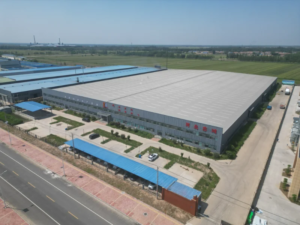
We manufacture PP and PE sheets for industrial use. PP can be a suitable choice when stiffness, operating temperature and chemical exposure match the proposed grade, but it is not the best material for every application. Compare the actual grades and the job conditions before ordering.
Tell us what the part does, which material you currently use and what needs to improve. A rigid cover, a chemical tank component and a part exposed to repeated impacts may need different materials, even when their dimensions are the same.

Compare Grades Before Comparing Properties
Identify the PP and PE Types
Polypropylene includes PP-H homopolymer, PP-B block copolymer and PP-R random copolymer. Their stiffness, impact behavior and suitability at low temperatures differ. The label PP-C is not enough to identify the exact copolymer; confirm the supplier's grade designation.
PE also covers different materials. Identify whether the comparison involves HDPE, LDPE, HMWPE or UHMWPE and obtain data for the actual grade. A result for one polyethylene cannot be used to rank every PE sheet against every PP sheet.
Balance Stiffness, Impact and Temperature
PP-H is often considered when stiffness is a priority. Its behavior under impact, especially in colder conditions, differs from that of impact-modified or copolymer PP. Compare measurements taken with the same test method and temperature, and account for holes, notches and repeated loads in the finished part.
Melting point is not an allowable service temperature. State the normal operating range, short temperature peaks, cleaning cycles and sustained load. Check the grade's supporting data and the component design rather than selecting PP simply because the job is described as high-temperature.
Cutting, CNC Machining and Welding
Buying sheet is different from selecting resin for injection molding. For sheet fabrication, agree the cut dimensions, drawing revision, critical tolerances, flatness and surface finish. Cutting heat, residual stress and thermal expansion can affect the finished dimensions of both PP and PE.
If the component will be welded, identify the sheet grade, welding process, compatible welding rod and joint requirements. Matching the material family alone is not a complete welding specification. Do not assume PP and PE can be fusion-welded to each other just because both are polyolefins.
Recycled Content and End-of-Life Handling
PP and PE can enter recycling routes where the material is correctly identified, sorted and accepted by a recycler. Additives, contamination and mixed materials affect what can be recovered. Choose an actual collection and processing route; a polymer name alone does not establish a lower environmental impact.
If recycled content is part of the purchase specification, agree the required proportion, material identification and performance checks for the offered grade. Recycled content and recyclability are separate questions, and neither proves harmless natural decomposition.
Chemical Exposure and Dimensional Stability
Match the Material to the Chemical Service
Send the chemical or mixture, concentration, operating and cleaning temperatures, contact duration and mechanical load. Include pressure and joint details where relevant. PP and PE resistance can change with these conditions; neither should be described as suitable for every corrosive environment.
A compatibility chart for a named grade is a starting point, not an approval for a different formulation or a complete tank assembly. Check the chart's test conditions and consider the joints, stresses and temperature cycles. Oxidizing media need particular care; do not assume PP is suitable merely because another PE grade is not.
Low Water Absorption Does Not Prevent Every Change in Size
PP and PE grades can both have low water absorption, but parts may still expand with heat, deform under load or move after machining. Define the dimensional acceptance conditions and installation clearance. Compare water-absorption figures only when the grades, method and exposure time are identified.
When to Consider PP or a PE Alternative
PP Is Worth Reviewing When
- Stiffness matters: a cover, partition or fabricated component needs limited deflection, with the actual temperature and load included in the assessment.
- The chemical service is defined: the proposed PP grade has supporting compatibility information for the stated medium and conditions.
- The part will be fabricated from sheet: cutting, machining or compatible welding can meet the drawing and joint requirements.
- Weight is a design constraint: compare the dimensions, grade density and required thickness, not density as a stand-alone quality ranking.
Review PE or Another Material When
- Cold conditions and impact dominate: compare suitable PE grades and PP copolymers at the lowest expected temperature rather than assuming ordinary PP-H is adequate.
- Sliding, wear or repeated movement matters: identify the contact surfaces, speed and loads, then compare the relevant PE grades. HDPE, HMWPE and UHMWPE are not interchangeable designations.
- The proposed grade lacks evidence for the job: assess another material against the same requirements instead of treating either PP or PE as a universal solution.
Food contact, drinking-water contact, medical use and steam sterilization require separate grade-specific checks. Specify the contact conditions, cleaning or sterilization cycle and destination requirements before making a suitability claim. UV stabilization, antistatic, conductive and flame-retardant behavior also depend on the actual formulation and supporting tests.
Agree the Sheet and Fabrication Specification
- Supply format: state thickness, length, width, color, surface and quantity, and whether you need full sheets, cut blanks or drawing-based parts.
- Acceptance requirements: identify critical dimensions, flatness, finish and any requested inspection documents. Confirm the available scope in the quotation.
- Export packing: agree protection, handling, packing dimensions, markings and delivery destination for the proposed order rather than assuming every sheet needs the same packing.
Discuss Your PP or PE Sheet Application
Send the material requirement, service conditions, dimensions or drawing, quantity and delivery destination. Ask us to review your PP or PE sheet requirements. We will clarify the proposed grade and fabrication scope before confirming the quotation, packing and delivery schedule.