We supply polypropylene (PP) sheets for panels and fabricated parts. Everyday uses include dividers, trays and storage components; industrial uses include process equipment and housings. To select the sheet, tell us what the part will contact, how it is supported and how it will be fabricated.
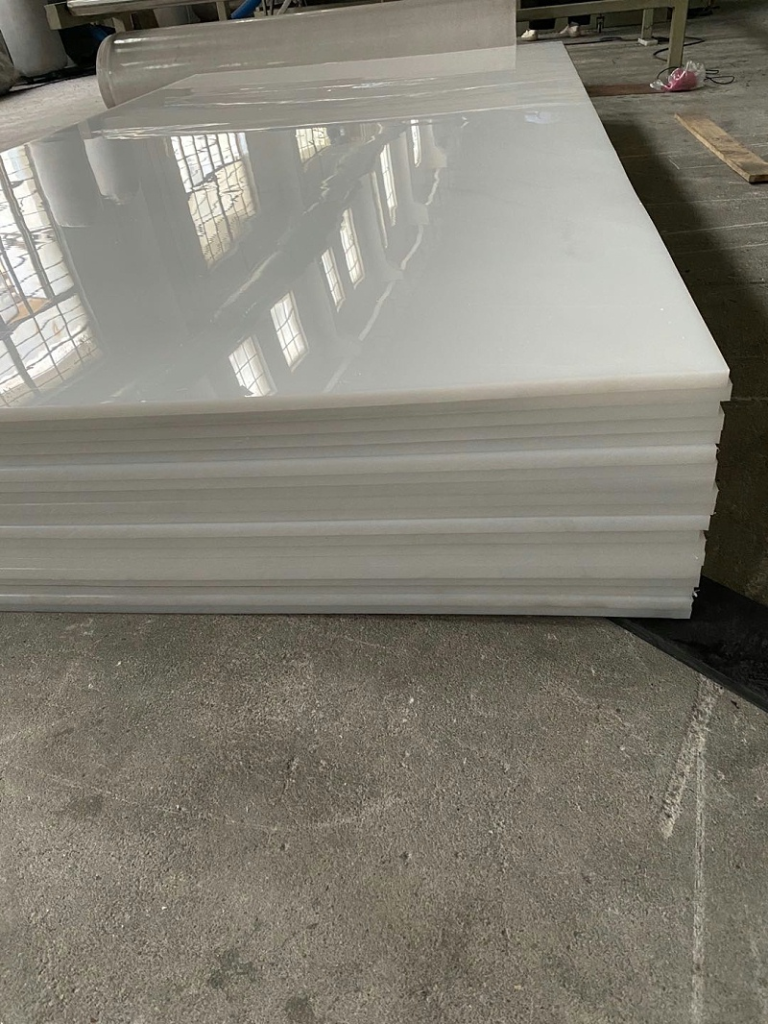
Properties that matter in a PP sheet application
- Handling and weight: unfilled PP is relatively light compared with metal, which can help with removable panels or trays. Compare the complete part, including its thickness, supports and hardware.
- Surface and fit: covers, dividers and trays need a defined surface finish and flatness. A smooth face is not the same as a polished appearance or a finished-part tolerance.
- Stiffness under load: panel thickness and support spacing affect deflection. Include the duration of the load and temperature when assessing a PP panel, not just a short-term strength value.
- Electrical properties: unmodified PP generally acts as an electrical insulator, while specialized formulations can behave differently. An electrical enclosure also needs the specified insulation, heat and fire-performance evidence.
- Fabrication options: PP can be cut, machined or formed, and welded with compatible PP material. Select the method around the grade, shape, joint loading and contact conditions.
- Chemical exposure: PP is used in equipment handling many acids and alkalis. Evaluate the actual medium, concentration, temperature, contact duration and cleaning agents for the selected grade.
- Temperature and impact: warm, continuously loaded panels and parts exposed to cold impacts have different requirements. Compare the relevant grade data rather than treating one temperature as a limit for every PP part.
- Reuse and end of use: for trays or dividers used repeatedly, consider cleaning, damage inspection, repair and replacement. Plan for disassembly and the local recovery route when the part reaches the end of use.
- Dimensions and movement: temperature changes and fabrication can alter the geometry of a PP part. Account for movement in the support and fastening arrangement, and assess critical dimensions under agreed conditions.
- Part cost: compare sheet cost together with cutting, joining, supports, maintenance and replacement. A lower sheet price may not produce the lowest cost for the completed component.
PP sheet applications in daily use and industry
The same PP sheet description can lead to very different parts. A storage divider mainly needs useful geometry and handling performance; a process tank adds chemical contact, sustained loading and joint design. These examples connect the application to the material and fabrication questions that matter.
- Chemical-process equipment: process trays, splash shields and wet-process covers can be made from suitable PP sheet. Identify which faces contact the chemical and which supports or fasteners carry the load.
- Exhaust-air and wastewater treatment: PP is considered for ducts, scrubber housings and other process components. The gas or liquid composition, temperature, condensate and any fire or conductivity requirement guide material selection.
- Cleanroom and semiconductor equipment: wet-process panels and equipment housings can impose additional cleanliness, chemical and fire-performance requirements. A general PP sheet description does not establish suitability for a controlled environment.
- Tanks and fabricated containers: sheet-built tanks depend on the wall arrangement, supports, joints and long-term loading as well as chemical compatibility. A molded container or pipe is a different product form; its rating cannot simply be assigned to a fabricated sheet tank.
- Electrical housings and panels: PP may be considered for insulating covers or panels where its grade and geometry meet the application. Review fastening, heat sources, clearances and required electrical or fire tests as part of the enclosure design.
- Food-production and packaging equipment: sheet-fabricated trays or panels are different from packaging film and molded food containers. Direct food contact needs evidence for the actual grade and contact conditions, together with a cleanable part and joint design.
- Laboratory and medical equipment: PP can be considered for partitions, housings and fabricated storage parts. Cleaning or sterilization exposure must suit the material; suitability for a medical device or sterile application requires its own assessment.
- Everyday panels and storage parts: dividers, trays and interior fittings often prioritize size, surface, edge condition and easy handling. Identify the required fixing method and consider cleaning, knocks and movement before selecting the sheet.
- Water-treatment components: distinguish a tank cover or internal partition from a wall that contains liquid. Sustained load, supports, chemical dosing and joint integrity can control the design; drinking-water contact adds a separate material-document requirement.
Turn the application into a PP part specification
- Material choice: connect the required behavior to the offered PP grade and sheet form. A material selected for a lightly loaded divider should not be substituted into a chemical tank solely because both are called PP.
- Drawing and fabrication: identify finished dimensions, holes, cutouts, edges and joining details. State whether the delivery is a full sheet, cut blank or finished part so that inspection matches the item ordered.
- Inspection basis: define how thickness, flatness, surface and critical features will be checked. Separate routine sheet inspection from any material declaration or test needed for the intended application.
- Replacement and repeat orders: retain the material designation and drawing revision with the order. Match replacement panels to the agreed specification rather than choosing only by color or appearance.
A sample or first part can help check fit, appearance and access for cleaning. It does not replace the assessment of long-term loading, chemical exposure or a completed enclosure or tank.
Planning a bulk PP sheet order
- Custom options: identify the thickness, size, color, surface and required cutting or CNC features. We review your sheet and fabrication requirements against the drawing.
- Quality: agree material identification, dimensional and surface checks, and any required supporting records. Acceptance criteria should describe the supplied sheet or part, not an undefined promise of high quality.
- Packing: identify faces and edges that need protection, packing support, pallet or crate, labels and destination requirements. Keep parts identifiable after unpacking, particularly when an order contains different sizes or materials.
Discuss a PP sheet application
Send us the material, thickness, sheet dimensions or drawing, quantity and destination, together with the intended use and operating conditions. We will review your sheet supply and drawing-based fabrication requirements before preparing a quotation.