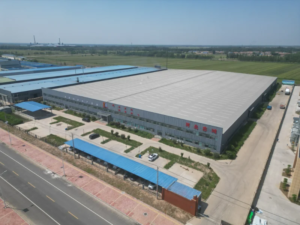
Project Background: Why This Comparison Matters
In industrial projects, HDPE and UHMWPE sheets are often considered interchangeable because both belong to the polyethylene family. In practice, however, choosing the wrong material can lead to premature wear, frequent replacement, and unexpected downtime.
This comparison focuses on real project conditions, not catalog descriptions, to help engineers and procurement teams make the right decision at the planning stage.
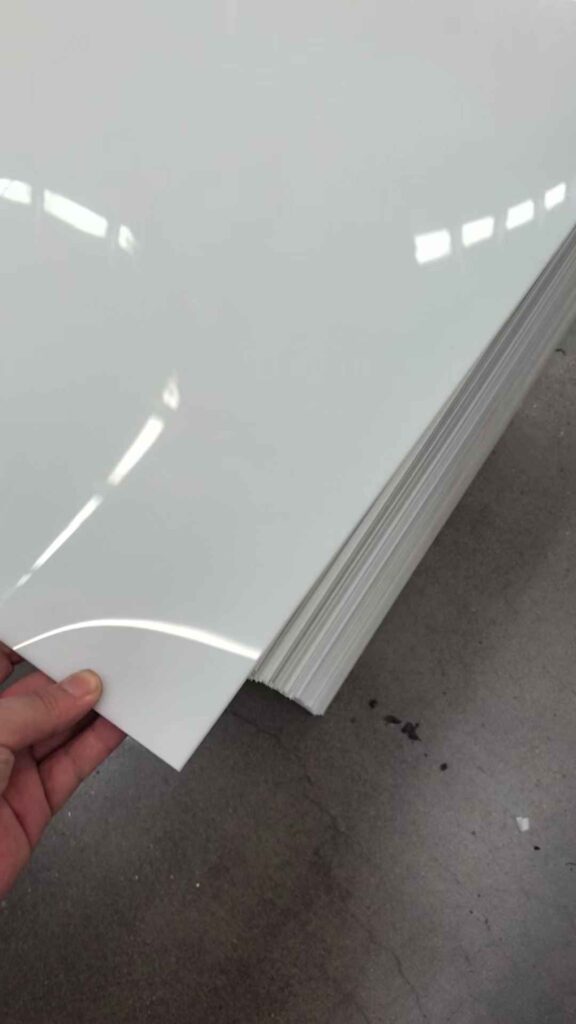

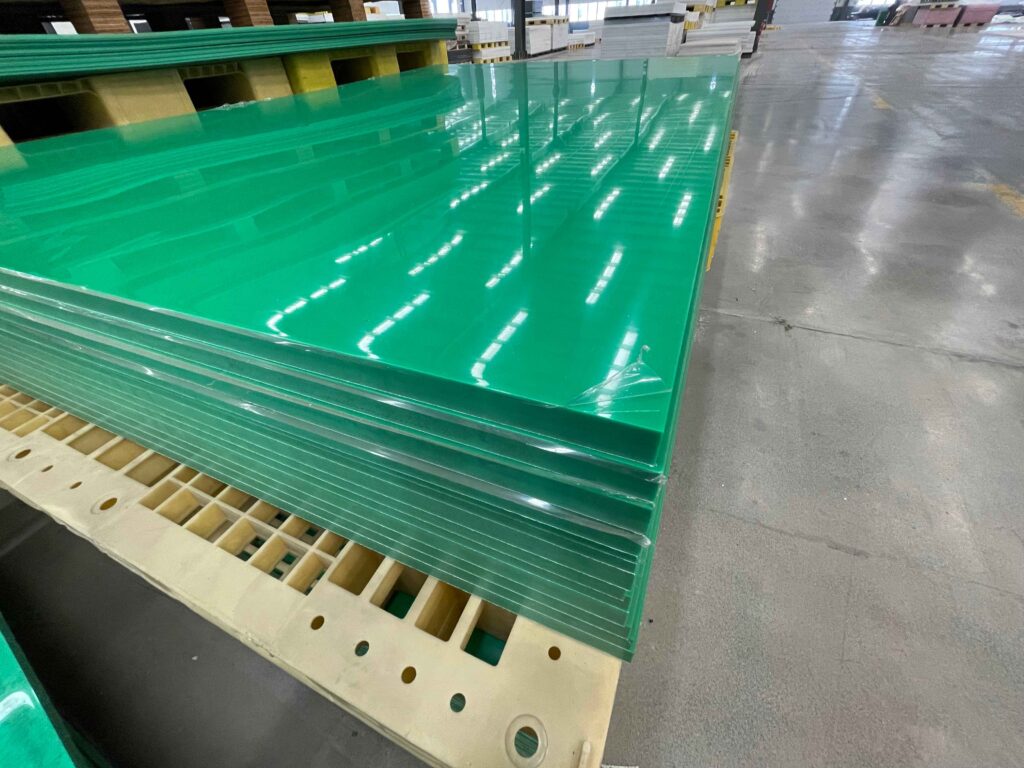
Key Material Differences That Affect Real Projects
Although HDPE and UHMWPE share similar chemical resistance and moisture stability, their performance diverges significantly under mechanical stress.
- HDPE (High-Density Polyethylene)
Offers good rigidity, impact resistance, and cost efficiency. It performs well in static or moderately loaded applications. - UHMWPE (Ultra-High Molecular Weight Polyethylene)
Designed for extreme abrasion resistance and repeated impact. Its ultra-long molecular chains dramatically reduce wear and friction.
When HDPE Sheets Are Recommended
HDPE sheets are a practical choice when cost control and structural stability are priorities.
Typical applications include:
- Static liners and panels with limited sliding wear
- Chemical tanks, covers, and splash guards
- Outdoor components exposed to moisture and UV (with proper stabilization)
- Projects where replacement intervals are predictable and acceptable
HDPE is often selected when wear is present but not continuous, and when dimensional stability is more critical than abrasion resistance.
When HDPE Sheets Are NOT Recommended
HDPE is frequently overused in applications where it will fail prematurely.
HDPE is not recommended for:
- Continuous sliding or abrasive contact
- Conveyor wear strips under heavy load
- Impact zones with repetitive shock
- High-cycle applications where friction heat builds up
In these scenarios, HDPE may deform, wear rapidly, or require frequent replacement, increasing long-term maintenance costs.
When UHMWPE Sheets Are the Better Choice
UHMWPE sheets are engineered specifically for harsh mechanical environments.
They are preferred when:
- Continuous abrasion is unavoidable
- Low friction is required to improve material flow
- Impact loading occurs repeatedly
- Noise reduction and smooth movement are important
Common UHMWPE applications include conveyor wear liners, chute liners, hopper linings, and sliding guides.
Typical Selection Mistakes in Industrial Projects
A common mistake is selecting HDPE solely based on initial material cost. In high-wear environments, the lower upfront price often leads to:
- Short service life
- Frequent shutdowns
- Higher labor and replacement costs
Another frequent issue is assuming UHMWPE is unnecessary “overkill.” In reality, UHMWPE often reduces total project cost when wear and downtime are factored in.
Practical Recommendation from an Engineering Perspective
If your application involves sliding contact, repeated impact, or abrasive materials, UHMWPE is usually the safer long-term choice.
HDPE remains suitable for:
- Structural components
- Chemical containment
- Light-duty wear applications
When project conditions fall between these extremes, material selection should be based on actual operating conditions, not material names.
Get a Factory Quote
To receive an accurate recommendation and quotation, please provide:
- Material preference (HDPE or UHMWPE)
- Sheet thickness and tolerance
- Operating conditions (abrasion, impact, temperature)
- Quantity per order and destination
Get a factory quote with recommended material options, lead time, and export packing details.