
HDPE is widely considered for commercial cutting boards and food-processing work surfaces because it is tough, machinable and has very low water absorption. However, “HDPE” and “food grade” are not interchangeable terms. The resin formulation, colorants, additives, manufacturing controls, intended food and conditions of use all affect compliance.
For a food-contact order, send us the destination market, foods and contact conditions. We need to confirm that the documents available for the offered sheet grade cover your intended use before you approve the order.
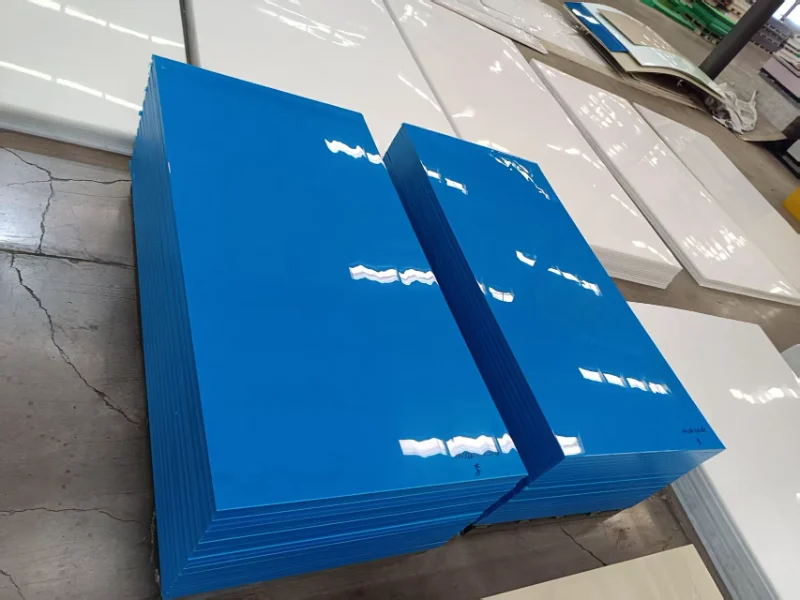
What “food grade HDPE” should mean in a purchase order
A generic statement such as “FDA approved” is not enough to identify a finished sheet. In the United States, polyethylene food-contact use is addressed through applicable authorizations and limitations, including 21 CFR 177.1520. FDA guidance also explains that compliance depends on the identity, specifications and conditions of use of each component.
For the European Union, plastic food-contact materials are covered by Commission Regulation (EU) No 10/2011, as amended, and related requirements. Send us the destination market, food type, contact time and temperature so the documentation and testing scope can be discussed.
Do not assume that a natural, white or colored sheet complies because of its appearance. Pigments and other additives are part of the finished formulation. Ask which documents identify the actual grade and which batch-specific records will accompany the delivery where required. Confirm document availability and traceability requirements before ordering.
Where HDPE cutting-board sheet is used
- Commercial kitchen cutting boards and replaceable inserts
- Meat, seafood, bakery, fruit and vegetable preparation surfaces
- Food-processing table tops and work stations
- Machine guides, spacers and non-structural components where the specified grade is suitable
- Custom routed boards with handles, grooves, holes or rounded corners
Suitability still depends on the finished part and its actual use. A cutting surface, conveyor component and machine wear pad may have different mechanical, sanitation and regulatory requirements even when all are made from polyethylene.
How to choose cutting-board thickness
Select thickness from the finished board dimensions, support layout, cutting loads, handling limits and any resurfacing allowance. Send us these details with the drawing; a thickness range or application name alone is not a design approval.
| Board configuration | Thickness review | Checks before ordering |
|---|---|---|
| Fully supported insert | Specify the finished thickness needed to fit the recess or support | Movement, edge support, warping and cleaning access |
| Commercial cutting board | Review board size, support and cutting loads together | Overall size, cutting force, handle/groove depth and flatness |
| Larger work surface | Define support spacing and acceptable deflection before selecting thickness | Table support, part weight, machining allowance and lifting |
| Grooved or deeply machined board | Specify the minimum remaining section and resurfacing allowance | Finished dimensions, internal stress, tolerance and handling equipment |
Thickness alone does not prevent deflection. Support spacing and fixing method matter. Use our guide to specifying HDPE sheet thickness for the information needed to review support, load and fabrication conditions.
Surface, color and fabrication details
| Feature | Why it matters | What to put in the drawing or RFQ |
|---|---|---|
| Surface finish | Affects grip, cleaning and visible knife marks | Smooth or textured face; whether both faces are usable |
| Color | May support a facility’s segregation system | Required color and applicable compliance documentation |
| Edges and corners | Affect handling and cleanability | Edge radius, corner radius and deburring requirement |
| Juice or liquid groove | Reduces the remaining section and changes cleaning detail | Width, depth, path and distance from the edge |
| Handles and holes | May create stress concentrations or hygiene traps | Size, position, radius and finish |
| Flatness and tolerance | Affect fit on tables and machine frames | Critical finished dimensions, permitted variation and agreed measurement conditions |
Color coding can help operators separate food-preparation tasks, but color by itself does not establish food-contact compliance or prevent cross-contamination. The site’s hygiene procedures, cleaning validation and staff practices remain essential.
Cleaning, inspection and replacement
The cleaning method must suit both the material grade and the food facility’s sanitation program. Specify cleaning chemicals, concentration, temperature and contact time when buying the board. Very hot cleaning cycles or unsuitable chemicals can affect performance.
Inspect boards for deep cuts, gouges, cracking, excessive warping, loose fastening and areas that can no longer be effectively cleaned and sanitized. Follow the facility’s resurfacing and replacement criteria and applicable local requirements. Remove a board from service if it cannot be restored to an acceptable condition. A blanket service-life claim is not reliable because use intensity and maintenance vary widely.
Documents and records to agree before approval
- Product identification and grade
- Applicable food-contact declaration or letter for the destination market
- Test report or supporting documentation when required
- Scope and limitations: food type, time and temperature conditions
- Color/additive coverage for the ordered formulation
- Batch identification and traceability requirements
- Finished dimensions, tolerances and required inspection records
Review available food-contact compliance evidence before placing the order, and agree the batch-specific and dimensional records to be supplied with the delivery where required. A declaration or report for a different resin, color or product does not automatically cover the sheet you receive.
RFQ checklist for custom HDPE cutting boards
| Market and use | Destination country, food type, contact time and temperature |
|---|---|
| Compliance | Required regulation, declaration, testing and traceability |
| Board specification | Color, thickness, length, width, surface and quantity |
| Processing | Cut-to-size, radiused edges, grooves, handles, holes or CNC profile |
| Inspection | Critical dimensions, flatness, finish and report requirements |
| Delivery | Destination, packing, labeling and required date |
We supply HDPE sheet and drawing-based cutting and machining. Food-contact documentation, colors, dimensions and minimum order depend on the requested grade and must be confirmed in our quotation.
Frequently asked questions
Is every HDPE sheet food grade?
No. Compliance applies to a specific formulation and intended conditions of use. Confirm the grade, additives, color and supporting documents for the ordered sheet.
Can you make a board from our drawing?
We can review your drawing for cutting and machining, subject to the offered grade and agreed manufacturing scope. Send the drawing revision, finished dimensions, tolerances, edge details, quantity and documentation requirements. A manufacturability review does not by itself approve food-contact compliance or the finished board’s design.
Does a colored board automatically meet a hygiene standard?
No. Color may support an internal segregation plan, but compliance and hygienic use depend on the actual material documentation, cleaning procedure, inspection and handling controls.
Request a documented quotation: send the destination market, intended food contact, dimensions, color, drawing and quantity.