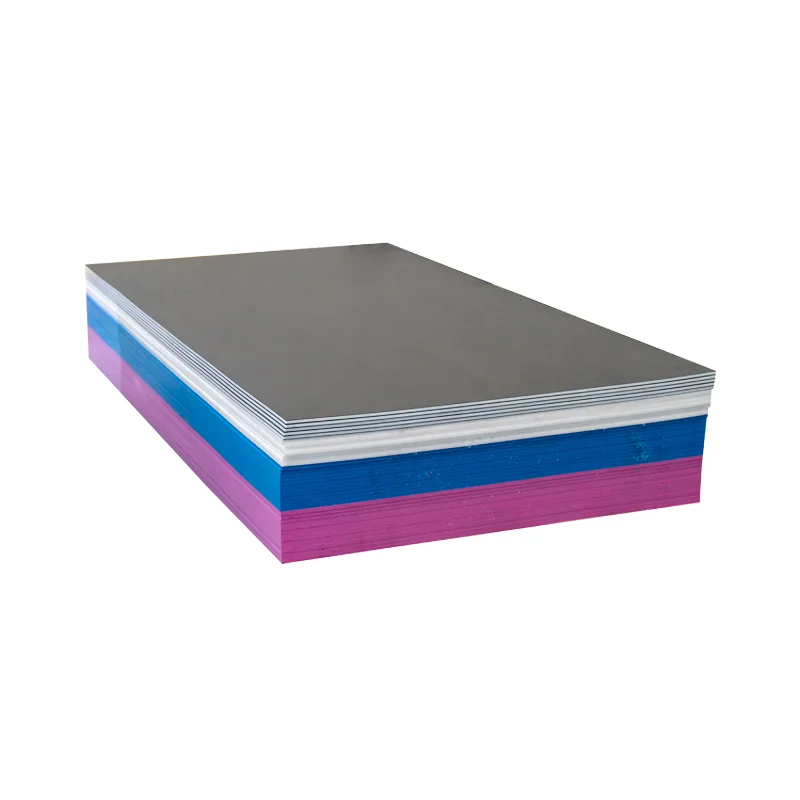
2色HDPEは、対照的な色のコア層(芯材)の上に表面層(キャップ層)を設けた材料です。CNCルーター加工でデザインに沿ってキャップ層を削ると、印刷インクや塗料による色入れを使わずに、コア層の色で文字や図柄を表せます。完成した標識やタグの読みやすさは、色のコントラスト、キャップ層の厚さ、デザインデータ、切削品質、設置条件によって決まります。
機器銘板、番号入りタグ、施設用標識のお見積りには、デザインデータと合わせて設置要件も当社にお送りください。供給するシートの層構成、色の組合せ、加工範囲、特注色の最小注文数量をお見積りで確認します。
ルーター加工で文字を表す仕組み
- 見える表層が背景色になります。
- CNCルーターまたは彫刻カッターが、デザインの加工経路に沿ってキャップ層を削ります。
- 対照色の芯材が、文字または図柄の色として現れます。
- 完成する標識やタグの切断輪郭、穴、端部仕上げ、取付けの詳細を図面で指定します。
彫刻深さを設定する前に、キャップ層の仕様を確認してください。提案するシート、デザインデータ、カッターを用いた試し加工で、不必要に深く削らずにコア層を均一に露出させられるかを確認できます。量産前に、小さな文字、細い線、広い塗りつぶし部分をサンプルで確認してください。
用途に合わせて標識の仕様を定める
| 用途 | シートと加工の要件 | 購入時の確認事項 |
|---|---|---|
| 設備銘板 | 明瞭な色のコントラスト、平面度、きれいな端部 | 最小文字サイズ、穴位置、接触薬品、清掃条件 |
| バルブ・ケーブル・資産タグ | 読み取りやすい色のコントラストと、適切な取付け仕様 | タグ寸法、穴・長穴、摩耗条件、番号の並び順 |
| 安全・注意表示 | 色のコントラストと、読み取りやすい承認済みのデザインデータ | 適用規格、視認距離、記号、取付方法 |
| 案内・室名表示 | 外観、表面仕上げ、色の一貫性 | 書体、エッジ仕上げ、屋内・屋外使用、固定方法 |
| 屋外施設用標識・タグ | 用途に適した耐候・UV安定化グレード | 気候、暴露期間、熱膨張、締結部品 |
| 操作パネル・表示銘板 | 正確な穴、開口部、彫刻表示 | 図面の基準、公差、部品の適合、改訂版 |
安全標識については、使用先で必要となる色、記号、表示文言、文字サイズ、レイアウト、設置の詳細をご提示ください。これらの要件は、購入者または標識の設計者が承認する必要があります。HDPE製の基材を選定したり、彫刻サンプルを承認したりしても、完成した標識の適合性が確認されたことにはなりません。
配色と表面仕上げの選定
色は表面層/コア層の順に、背景色を先、彫刻で露出する文字の色を後に指定してください。彫刻する面と、両面にキャップ層が必要かどうかを明記してください。色の承認には合意した現物色見本を用い、色番号は参考とし、比較条件と許容する色のばらつきを記録してください。画面上の画像は承認基準にはなりません。
使用時の照明条件で、平滑、つや消し、凹凸のある仕上げをサンプルで比較してください。表面の凹凸は、まぶしさや細かな彫刻の仕上がりに影響する場合があります。供給可能な仕上げと、保護フィルムが必要な場合はその種類および片面・両面のどちらを覆うかを確認してください。
CNCルーティング・彫刻時の要点
| 加工項目 | 重要な理由 |
|---|---|
| 工具形状と工具状態 | エッジのシャープさ、バリ、微細部の品質に影響します。 |
| 深さ制御 | 過度に削らず、図柄全体で芯材を確実に露出させる必要があります。 |
| 送り速度、主軸回転数、切りくずの排出 | 熱の蓄積、切りくずの排出、端部仕上げに影響 |
| シートの平面性と保持方法 | 大判パネルでも彫刻深さを均一に保つのに役立ちます。 |
| 最小文字高さと最小線幅 | 表層、カッター、必要な視認性に適合させる必要があります。 |
| 工具の進入・退出とコーナー半径 | 小さな文字の細部と、加工できる内側コーナーの半径に影響 |
当社は図面とシート仕様に基づいてCNCルーター加工をお見積りします。同じHDPEシートがレーザー切断やレーザー彫刻にも適している、あるいはアクリル彫刻材の設定をそのまま使えるとは考えないでください。レーザー加工をご希望の場合は、対象の材料、設備、安全管理、完成品の要件を別途評価する必要があります。
データ・図面の要求事項
- ロゴ、文字、記号のベクターデータ
- 完成サインまたはタグの寸法と厚さ
- 表層/芯材の配色と彫刻面
- 最小文字高さと最小線幅、彫刻深さ
- 定義した基準からの穴、長穴、開口部寸法
- コーナーR、エッジ仕上げ、取付詳細
- 部品の番号付け仕様または可変データ一覧
- 図番、改訂番号、数量、デザイン別数量
加工用のベクターデータと、表示文言、記号、レイアウトを確認するためのPDF校正データをご提出ください。文字をアウトライン化するか、承認済みのフォントファイルをご提供いただき、尺度と単位を明記してください。デザインデータと寸法入り図面の改訂を一致させてください。安全標識については、必要な表示文言や記号の解釈を当社に委ねず、承認済みの校正データをお送りください。
屋外使用と取付
屋外用標識については、設置場所、暴露条件、想定使用期間を当社にお知らせください。必要なUV安定化グレードの供給可否を検討します。対象シートの層構成と色に対応する根拠資料をご確認ください。UV安定化だけで、色が変わらないことや所定の使用寿命が保証されるわけではありません。
使用温度範囲で生じるHDPEの熱による寸法変化を許容できる取付け仕様をご提示ください。穴または長穴、固定具、ワッシャー、背面の支持、端部からの距離を定め、パネルを平面に取り付けるか自立式にするかを明記してください。当社のHDPEの屋外・海洋用途ガイドでは、暴露条件と支持についてより幅広く取り上げています。
サンプルと検査の範囲を合意する
- 承認済みの表面層/コア層の色、彫刻面、サンプルの識別情報を記録してください。
- 試作品または初品が必要か、何を確認するか、サンプルが何点必要かを合意してください。
- コア層の露出、彫刻部分に残ったキャップ層、不要な切削跡、バリ、表面の傷を確認してください。
- 合意した測定条件と図面の基準を用いて、指定された全体寸法と重要な穴または切抜きを測定してください。
- 承認済みの校正データと可変データ一覧に照らして、文字、番号、向き、デザインの改訂版を確認してください。
- 保護フィルム、品目の識別表示、番号付きセットの梱包順序を確認してください。
リピート注文では、承認済みのデザインデータ、図面の改訂版、層構成、色見本を参照してください。キャップ層の仕様、色、層構成が変わる場合は、製造前に新たな彫刻サンプルについて合意してください。色の承認が、注文で定めた材料、寸法、設置の要件に代わるものではありません。
2色HDPE彫刻シートのお見積りに必要な情報
| シート | 表面層/コア層の色、総厚さ、寸法、仕上げ、屋外用グレードの要件 |
|---|---|
| データ | 加工用のベクターファイル、承認済みのPDF校正データ、アウトライン化した文字またはフォントファイル、改訂版、可変データ一覧 |
| 彫刻 | 彫刻面、合意した深さ、最小線幅と最小文字高さ、加工方法、サンプルの範囲 |
| 加工・製作 | 外形、穴、長穴、コーナーR、エッジ、公差 |
| 数量 | 未加工シート、切断したブランク材または完成部品、デザインごとの数量、想定リピート注文 |
| 検査 | 承認済みの色見本、サンプル数量と受入れ時の確認項目、重要寸法、必要な記録 |
| 納入 | 納入先、合意した引渡条件、保護フィルム、品目ラベル、梱包 |
当社は2色HDPE彫刻シートを供給し、仕様を検討したうえで、図面に基づく切断とCNCルーター加工をお見積りします。供給可能な色、層構成、厚さ、シート寸法、加工範囲、公差、最小注文数量をお見積りで確認します。
よくある質問
どの彫刻深さを選ぶべきですか?
供給されるシートのキャップ層の仕様を確認し、予定するカッターとデザインデータを用いて仕上がりを確認してください。シートの平面度と固定方法も、コア層を均一に露出させられるかどうかに影響するため、量産前に試し加工と受入基準を合意してください。
特注の色の組合せに対応できますか?
当社は、現物色見本または合意した色番号に基づいて、ご希望の色の組合せを検討します。対応可否は、材料の層構成、数量、許容する色のばらつきによって決まります。製造前に現物サンプルを確認してください。色番号だけで完全な色一致が保証されるわけではありません。
番号入りの完成タグも供給できますか?
当社は、承認済みのデザインデータ、番号一覧、タグ図面、数量、検査範囲に基づいて加工のご依頼を検討します。供給するシートと加工範囲をお見積りで確認します。初品に関する要件がある場合は、量産前に合意する必要があります。
標識・タグのお見積りには: 表面層/コア層の色、厚さ、デザインデータ、数量、加工要件、納入先を添えてお見積りをご依頼ください。