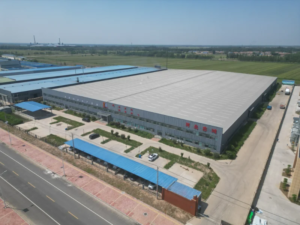
Project Background: Why PP Selection Often Goes Wrong
Polypropylene (PP) sheets are widely used in industrial projects because of their chemical resistance and low cost. However, many failures occur when standard PP is applied beyond its mechanical limits, especially in structural or load-bearing environments.
This comparison explains when standard PP works well and when FRPP becomes a necessary upgrade, based on real project conditions rather than datasheets alone.
Understanding the Structural Difference Between PP and FRPP
Although both materials are based on polypropylene resin, their internal structure leads to very different performance.
- Standard PP Sheets
Homogeneous polypropylene with good chemical resistance and flexibility. Best suited for light-duty and non-structural applications. - FRPP (Fiber-Reinforced Polypropylene) Sheets
Reinforced with glass fibers to significantly improve rigidity, dimensional stability, and load-bearing capability.
The reinforcement changes how the material behaves under load, temperature variation, and long-term stress.
When Standard PP Sheets Are Recommended
Standard PP remains an effective and economical solution when mechanical stress is limited.
Typical applications include:
- Chemical tanks and linings with minimal structural load
- Laboratory equipment and covers
- Corrosion-resistant panels in low-stress environments
- Lightweight components where flexibility is acceptable
PP is often selected when chemical compatibility is the primary requirement, and mechanical strength is secondary.
When Standard PP Sheets Are NOT Enough
Problems arise when PP is expected to perform like a structural material.
Standard PP is not suitable for:
- Load-bearing panels or self-supporting structures
- Large-span tank walls without external reinforcement
- Equipment exposed to continuous deformation or vibration
- Applications requiring tight dimensional tolerances over time
In these cases, PP may creep, bend, or deform, leading to misalignment, leakage, or premature failure.
When FRPP Sheets Become the Better Choice
FRPP sheets are designed to address the mechanical limitations of standard PP.
They are recommended when:
- Structural rigidity is required
- Panel deformation must be minimized
- Long-term dimensional stability is critical
- Equipment operates at elevated temperatures
FRPP is commonly used in chemical processing equipment, scrubbers, ducting systems, tanks, and load-bearing panels where standard PP cannot maintain shape over time.
Common Selection Mistakes in PP-Based Projects
A frequent mistake is assuming that thicker PP sheets can replace FRPP. Increasing thickness does not eliminate creep or improve stiffness proportionally.
Another issue is choosing PP to reduce initial cost, while ignoring:
- Reinforcement requirements
- Support structure complexity
- Long-term maintenance risks
In many projects, FRPP simplifies design and reduces overall system risk.
Practical Recommendation from an Engineering Perspective
Choose standard PP when:
- Chemical resistance is the main concern
- Loads are low and well supported
- Deformation over time is acceptable
Choose FRPP when:
- Structural integrity matters
- Large panels or unsupported spans are involved
- Long service life and stability are required
The correct choice depends on mechanical demand, not just chemical compatibility.
Get a Factory Quote
For an accurate recommendation and quotation, please provide:
- Material preference (PP or FRPP)
- Sheet thickness and size
- Operating temperature and mechanical load
- Application details and quantity
Get a factory quote with material suggestions, lead time, and export packing options.