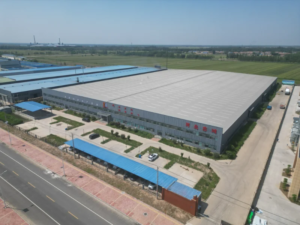
At Zhihong Plastic, PE sheet production connects material selection with extrusion, cooling, cutting and inspection. The resin name alone does not tell you how flat a sheet will be or how it will behave when machined.
The production route needs to match the polyethylene grade and the required product. This article explains the main stages of extruded PE sheet manufacture, along with the processing differences and inspection limits that matter when sheets are supplied for fabrication.
Resin selection and formulation
HDPE sheets are one type of polyethylene sheet, not a separate material family from PE. Within that type, the resin grade influences melt flow, stiffness, toughness and processing behavior. A grade chosen for another molding process is not automatically the right choice for sheet extrusion.
We review the application before selecting the material. A liner, a protective panel and a drawing-based machine part can place different demands on the sheet. The expected load, working temperature, chemical contact and subsequent machining help define the material requirement.
Formulation is considered alongside the resin. Color masterbatch changes appearance; stabilizers may be used for processing or outdoor exposure where required. These ingredients need to be compatible with the selected grade and use. A specified color or the general term HDPE does not, by itself, establish UV resistance or a service life.
Food-contact, electrical and other application-specific requirements must be checked for the proposed material and use conditions. They cannot be established from a clean surface or the PE name alone. Any required supporting documents or performance tests need to be identified before production.
From feeding to a uniform melt
Once the material and formulation are agreed, the components are weighed and mixed for the production run. Consistent dosing and protection from contamination matter: an uneven color blend or unwanted material can show up as streaks, inclusions or inconsistent appearance in the sheet.
In conventional screw extrusion, polyethylene is heated, plasticized and mixed as it moves through the barrel. The aim is a sufficiently uniform melt for the forming stage, rather than simply heating the resin to a nominal temperature.
Our production team adjusts feeding, heating and screw speed for the selected grade. These controls interact with melt pressure and output. Insufficient plasticization can disturb flow, while excessive heat or prolonged residence can damage the material.
There is no single temperature or screw-speed setting for every PE sheet. Resin grade, sheet dimensions and equipment all affect the production conditions. Process settings therefore have to be considered together, not presented as a universal recipe.
Extrusion and sheet forming
For an extruded sheet, the melt passes through a flat die and then through the forming and cooling section. Die adjustment, output, roller conditions and take-up speed work together to control the sheet profile and surface. Changing one setting can affect more than one feature of the finished sheet.
Thickness has to be considered across the sheet width, not only at one point. Width, surface condition and the dimensions reached after cooling also matter. A nominal sheet size does not replace agreed limits for thickness variation, flatness or the allowance needed for later machining.
Other polyethylene grades can require different manufacturing routes. UHMWPE stock shapes are commonly produced by compression molding or ram extrusion, which differs from conventional melt-screw extrusion of HDPE. The grade and route should be identified separately; not every product sold as a PE sheet follows the same process.
Sheet forming establishes the starting geometry for subsequent cutting or fabrication. It does not establish that the material is suitable for every outdoor, structural or chemical application; those decisions still depend on the grade, design and service conditions.
Cooling, shrinkage and residual stress
An extruded sheet does not cool uniformly through its thickness. Its surface can solidify while the core remains hotter. Shrinkage during this stage can leave residual stress, particularly where cooling is uneven.
Cooling control is therefore part of managing flatness and dimensional behavior, not a guarantee of a stress-free sheet. Removing material during cutting or milling can redistribute residual stress and cause the part to move. Thick sheets and parts with uneven material removal need particular attention.
For a stress-sensitive part, material-specific annealing may be considered as a separate process step. Its need and method depend on the grade, thickness and geometry; it should not be assumed to be included with every PE sheet.
Trimming, cutting and CNC machining
After cooling, sheets are trimmed and cut to the required supply size. A sheet intended for further machining may need additional material allowance. The supplied blank size and the finished component dimensions should therefore be distinguished on the order and drawing.
We offer cut-to-size and drawing-based plastic sheet fabrication, including drilling, routing and CNC machining. The processing scope is reviewed against the drawing or sample rather than assumed from the material name.
Machining heat and clamping can affect the measured shape. Supporting a large panel and planning material removal are part of the machining task, especially for thin sections or one-sided pockets. A smooth-looking blank is not proof that a finished part will hold every requested tolerance.
We review critical dimensions, hole positions and assembly requirements before machining. Sheet-size tolerances are not interchangeable with the tolerances on a finished drawing; the measurement conditions and inspection stage also need to be agreed.
What the inspection should establish
Before shipment, we check sheet appearance and dimensions against the order requirements. For machined parts, the drawing defines the features that need checking. Useful acceptance criteria are specific enough for both parties to apply the same measurement or visual assessment.
- Thickness: agree the permitted variation and measurement locations, rather than relying on one spot reading.
- Size and flatness: define the limits and how the sheet or part is supported when checked.
- Surface and edges: identify acceptable appearance, color variation, trimming and edge finish.
- Machined features: use the drawing references for critical dimensions, hole positions and any required inspection points.
Appearance and dimensional checks do not prove impact strength, wear resistance, food-contact suitability or chemical performance. Where a property is critical, the relevant grade information and test requirements must be agreed separately. Any additional inspection scope is confirmed for the order.
Repeat orders should refer to the same agreed material, formulation, dimensions and acceptance criteria. If a requirement changes, it needs review before the next production run rather than being treated as an equivalent specification without checking.
Packing the sheets and finished parts
Packing is selected for the sheet dimensions, quantity and shipping arrangement. We can discuss surface protection, pallet packing, wooden crates and shipping marks for the order. Machined parts may need separate protection for holes, edges or finished surfaces.
Sheets need adequate support and secure restraint during handling and transport. Packing should protect the surface without concentrating loads on vulnerable edges or allowing a large panel to sag. Package dimensions and loading arrangements are considered before dispatch.
For a production or fabrication requirement, send us the specification or drawing and the intended service conditions. We will review the material, processing and inspection scope with you before confirming the supply.