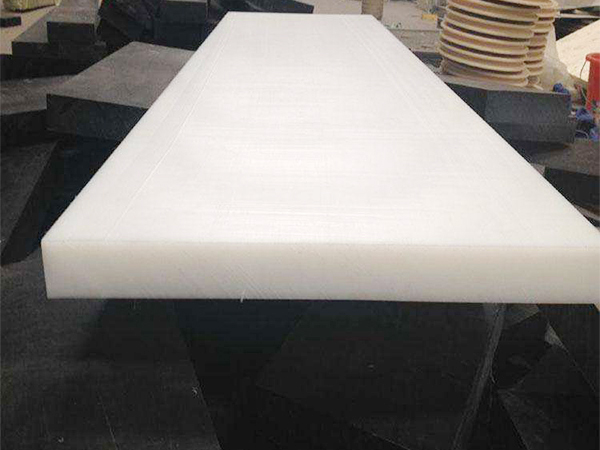
UHMWPE sheet can be considered for wear liners, guides, chutes, sliding interfaces and other industrial parts. It is not, however, a complete purchase specification or an approval for a finished assembly. The material offered, the service condition, the part design and the acceptance basis all need to be defined before quotations can be compared.
This guide helps buyers turn a broad request for “UHMWPE board” into a reviewable RFQ. It does not assign one performance level, chemical scope, temperature limit, compliance status or service life to every UHMWPE formulation.
What “UHMWPE Sheet” Must Mean in a Purchase Specification
UHMWPE identifies a polyethylene family with very high molecular weight; it does not automatically state the exact resin, additives, colour, manufacturing route, thickness tolerance, surface, test method or permitted end use. Those details matter when a general material name becomes a supplied sheet or a machined part.
- State the offered grade or resin basis, any required virgin or recycled-material policy, colour, thickness, sheet size and surface condition.
- State the finished-part function: liner, guide, chute, hopper component, bearing interface, guard, wet-environment panel or another defined use.
- Separate a material declaration from approval of the load path, fixing, installation or safety function of the final assembly.
Start With the Service Condition, Not a Generic Property Chart
A material data sheet can be useful for screening, but it does not replace the conditions of the actual part. Describe the contacting material, particle size or sliding partner, load, speed, cycle, temperature, moisture, cleaning method, chemical exposure, support arrangement and expected inspection condition.
- For bulk-material liners, identify the conveyed material, impact zones, abrasion pattern, flow angle, support and fixing layout.
- For moving guides, identify contact pressure, speed, duty cycle, lubrication if any, mating surface and acceptable noise, heat or wear condition.
- For wet, outdoor or chemically exposed components, identify the actual medium, concentration, temperature, duration, UV exposure and cleaning regime.
Screen the Material Against the Likely Failure Mechanism
| Project question | Information to define | Why it matters |
|---|---|---|
| Wear or sliding | Counterface, material flow, speed, contact pressure, impact and lubrication | Wear behaviour cannot be inferred from the material name alone |
| Static load or span | Support spacing, load location, duration, temperature and permitted deflection | Part geometry and long-term deformation must be reviewed with the design basis |
| Chemical or cleaning exposure | Medium, concentration, operating and cleaning temperature, contact time and stress | Compatibility depends on the exact service condition and offered formulation |
| Fabrication and installation | Drawing revision, holes, edges, tolerances, fastening, welding or bonding scope | Machining and assembly details can determine whether a sheet is suitable for the part |
Use this table to frame a purchase review, not as an engineering approval. Safety-critical, structural, regulated or installed-system functions require the responsible project party to set the design and acceptance requirements.
Define the Grade, Formulation and Evidence Scope
Before production, record the product designation, material basis, colour, thickness, dimensions, surface, sample or drawing reference and any requested documents. If a property matters, ask what formulation, specimen condition, method and scope the available evidence covers.
Do not combine unrelated requirements under one label. UHMWPE, UV stabilisation, food contact, flame behaviour, antistatic performance, low friction and a particular chemical service can each require different grades, evidence and approval paths.
Compare UHMWPE With Other PE and Engineering Plastics by the Actual Part
UHMWPE should not be treated as a substitute for every PE sheet or every mechanical plastic. Compare the required part against the available PE sheet range, the stated scope of HDPE sheet and the relevant UHMWPE application guide. The comparison should include the offered grade, geometry, load, environment, fabrication route, dimensional requirement and evidence needed for the order.
Design Inputs for Liners, Guides and Sliding Parts
Wear liner or chute
Show impact locations, flow direction, support grid, panel joints, mounting pattern, replaceable zones and access for inspection. A sheet thickness should be selected from the finished-part design, not from a generic liner-thickness statement.
Guide or moving interface
Define the mating material, contact area, motion, speed, intermittent or continuous duty, tolerance stack-up and permitted change in geometry. A sample can help confirm fit or surface behaviour, but it is not evidence for every production or service condition.
Panel, guard or wet-environment part
Define support span, point loading, fixing, drainage, thermal movement, visible faces and exposure. If the part has a safety function, a structural role or a regulated end use, assign its approval to the responsible designer, owner or authority.
Fabrication, Tolerances, Fastening and Joints
For cut or CNC-machined parts, provide the final drawing revision, functional dimensions, tolerances, holes, slots, edge condition, surface requirements and inspection points. For a combined supply and fabrication request, the custom plastic part guide explains the type of drawing and RFQ information that allows a supplier to assess machining scope without changing the project approval boundary.
Fixing, thermal movement, unsupported edges and installation interfaces should be shown on the drawing. If welding, bonding, printing or coating is required, specify the process and acceptance requirement rather than assuming that a low-friction surface will accept every joining system.
Chemical, Food-Contact, Temperature and Outdoor Statements Need Specific Scope
Do not approve a part based on a generic statement that UHMWPE is “chemical resistant,” “food grade,” “UV resistant” or suitable to a named temperature. For each requirement, identify the exact offered grade, colour, formulation, medium, test or declaration, destination market and completed-part condition that the evidence covers.
For chemical equipment, compare the material, geometry and joining scope with the chemical-processing selection guide. Project-specific review remains necessary where an error could affect safety, containment, compliance or system operation.
Set Inspection, Documentation, Packing and Traceability Before Production
- Agree the inspection points for thickness, dimensions, surface, colour reference, cut features, holes and any critical measurement.
- State whether a sample, first article, photographs, material declaration, data sheet, test record or third-party inspection is required.
- Define sheet protection, edge protection, pallet or crate support, labels, destination, Incoterm and any project-specific marks.
Traceability should match the project risk. If lot identification or document retention is important, place the requirement in the RFQ and order rather than asking for evidence after the goods have been packed.
What to Include in a Comparable UHMWPE Sheet RFQ
- Part function, service environment and consequence of failure.
- Required material basis or evidence, colour, thickness, sheet dimensions and surface.
- Load, contact material, movement, speed, impact, wear, temperature and medium where applicable.
- Drawing revision, finished dimensions, tolerances, machining, holes, fasteners, joints and inspection scope.
- Sample or first-article requirement, documents, packing, destination, Incoterm, quantity and required delivery date.
Frequently Asked Questions
Is UHMWPE the same as HDPE?
No. They are both polyethylene families, but the offered material, molecular-weight range, processing route and project requirements need to be compared. Do not transfer a result from one PE grade to another without checking the relevant scope.
Can a data sheet approve a finished liner or guide?
No. A data sheet can describe the stated material and test scope. It does not by itself approve support, load path, fixing, impact, temperature, chemical exposure, assembly geometry or installation for a finished part.
Can UHMWPE be bonded or welded?
Joining feasibility depends on the selected grade, geometry, preparation, equipment, load and acceptance requirement. Specify the required method and validate it for the actual assembly rather than treating it as a universal material feature.
Request a Project-Specific UHMWPE Sheet Quotation
For a material review or quotation, send the application, service conditions, material requirement, thickness, drawing or sheet size, quantity and destination. Zhihong Plastic can review available supply configurations, machining scope, documentation request, MOQ, lead time and packing against the final specification.