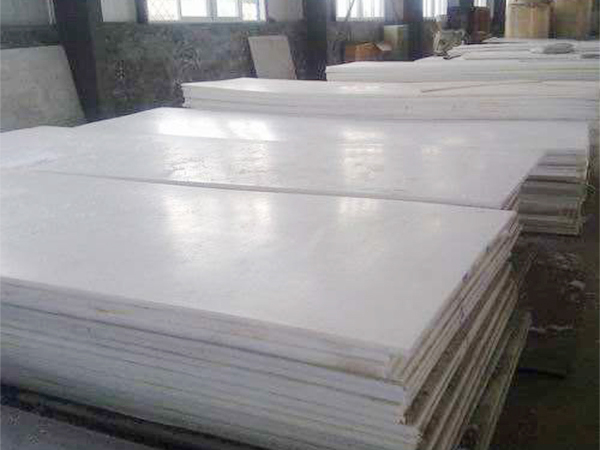
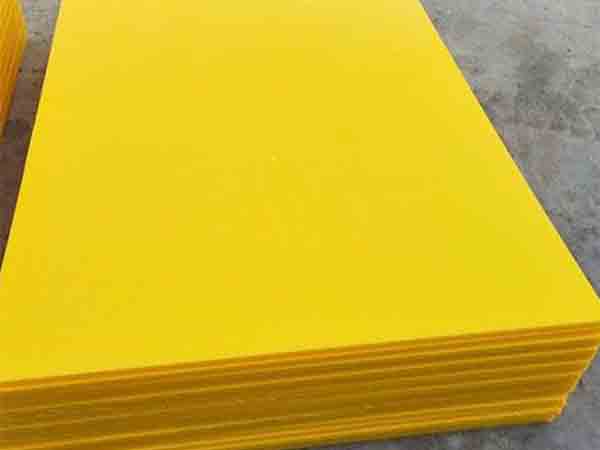
UHMWPE boards are semi-finished plastic sheets that can be used as full sheets, cut into panels or machined into components. These are different purchase scopes: a stock sheet provides material for further work, while a finished part needs defined dimensions, features and inspection.
Start with the stage you want delivered. Buying full sheets leaves cutting and nesting to your workshop. Rough-cut blanks leave material for finishing; cut-to-size panels and CNC parts require agreement on which dimensions and surfaces are finished. This guide explains how to make those distinctions clear.
Contents
- Sheet, blank or finished part
- Material grade and formulation
- Dimensions, surface and flatness
- Cutting and CNC machining
- Panel fit in the equipment
- Compare material alternatives
- Grade-specific service requirements
- Inspection and traceability
- Packing and shipment
- What to send for a quotation
- Frequently asked questions
- Request a quote
From stock board to finished part
The words “cut board” can mean a rough blank or a panel ready to install. State the intended stage and who will complete any remaining work. Include the part function, such as a guide, wear panel or chute liner, so the important faces and features can be identified.
- Full sheets: specify the material, nominal thickness and sheet size when you will carry out the cutting and machining.
- Rough-cut blanks: define the blank dimensions and the machining allowance needed to reach the finished size.
- Finished panels or CNC parts: provide the final drawing, functional tolerances, holes, slots and edge details to be supplied.
Material grade and formulation
UHMWPE means ultra-high molecular weight polyethylene, also called PE-UHMW. It is not an interchangeable name for ordinary HDPE. Specify the material designation, color, and any virgin or recycled-content requirement. For grade selection, compare UHMWPE advantages and limitations with our other PE sheet options; the UHMWPE application guide shows typical wear and sliding uses.
A grade designation identifies the material more reliably than its color. If the order depends on a test property or declaration, check the formulation and test conditions covered by the document. Keep that material reference on the drawing or order so replacement parts use the intended grade.
Dimensions, surface and flatness
| Feature | What to specify | What it controls |
|---|---|---|
| Size and thickness | Stock or finished dimensions, nominal thickness, machining allowance and quantity | Whether the order supplies a whole sheet, an oversize blank or a finished part |
| Surface and color | As-produced or machined faces, visible surfaces, edge finish and agreed color reference | Which faces need further work and how appearance will be checked |
| Flatness and tolerances | Critical dimensions, datum surfaces, temperature, support and measurement method | How the part is positioned and measured without masking its shape |
| Part interfaces | Hole positions, slots, joints, backing, fasteners and mating parts | Fit between the panel and the equipment around it |
Nominal stock thickness is not a finished-part tolerance. For a critical dimension, agree the measurement locations, temperature and support condition. Thin or flexible pieces can deflect under probe pressure or clamping, so a reading taken while forcing the panel flat may differ from its free-state shape.
Cutting and CNC machining
A rectangular panel and a component with pockets, slots or accurately positioned holes need different machining work. Identify the features that control fit rather than applying the tightest tolerance to every surface. Cutting heat, clamping and the release of internal stresses can affect the finished geometry. Use the HDPE and PP fabrication guide to organize drawing and machining requirements.
Drawings and revision control
Send one current drawing revision with units, finished dimensions and reference surfaces clearly marked. Show machining allowance separately if you are buying blanks. A sample or first part can help check fit before a larger batch; drawing changes may also alter material yield, machining time and inspection.
Holes, edges and installation interfaces
Locate holes and slots from consistent datums, and show edge treatment, washers, backing and panel joints where relevant. UHMWPE expands and contracts with temperature. The equipment design should allow that movement through suitable clearances and mounting details rather than assuming a tight fit will remain unchanged in service.
Panel fit in the equipment
Passing a dimensional check at delivery and fitting correctly in operation are different questions. The supporting structure, fasteners and neighboring parts determine how the panel is restrained. Sustained load can cause creep, while temperature changes can alter clearances; a material data sheet alone does not resolve those effects.
Checks on the supplied sheet or panel
For stock sheets, agree size, thickness range, surface and material identification. For finished panels, add the drawing dimensions, holes, edges and measurement conditions. The inspection plan should match the ordered stage, not treat every raw board as a fully machined component.
Installed fit and movement
For guides and wear parts, consider contact pressure, sliding speed, impact and how the load reaches the backing. Include operating and cleaning temperatures, joints and access for replacement. Set the installed clearances and support from those conditions; the supplier's part dimensions are only one input to the equipment design.
Compare UHMWPE with PTFE and other materials
UHMWPE, PTFE, nylon and PP answer different design needs. A substitute may change stiffness, sliding behavior, chemical compatibility, thermal movement or moisture response. Recheck the thickness and running clearance rather than copying a drawing unchanged between materials. Read the nylon, PP and PE comparison for material-family differences.
Grade-specific service requirements
Food-contact documentation needs to cover the specified grade, color and intended contact conditions. Outdoor use may require a UV-stabilized formulation. For hot equipment, check the grade's service limits together with load and duration, rather than using melting temperature as an operating limit.
For process or cleaning chemicals, identify the liquid, concentration, exposure time and operating temperature. Mechanical stress and the joint arrangement also matter: resistance of a material sample does not establish the leak-tightness of an assembled panel. Review the HDPE and PP chemical-processing guide for sheet selection and joining requirements.
Inspection, documents and traceability
- Agree measurement points, datum surfaces and support conditions for thickness, dimensions, hole positions and flatness. Define the surface and color checks separately.
- Identify any sample, first-part check, photographs, material declaration or test record needed. A fit check can verify a particular geometry; it is not a service-life test.
- Use the material reference, batch identification, part number and drawing revision required by the project on the relevant records or packing labels.
Packing and shipment
Packing a stack of full sheets is different from packing long strips or machined parts with exposed edges. Agree stack support, face and edge protection, labels, part counts and any separation needed between finished surfaces. State the destination and delivery term so the packing arrangement and shipment can be reviewed together.
What to send for a quotation
- Application, part function, material designation, color and any grade-specific service or documentation requirement.
- Sheet, blank or finished-part scope; thickness, dimensions, machining allowance, surface and quantity.
- Current drawing with units, critical tolerances, holes, slots, edge details and mating features for cut or CNC-machined parts.
- Inspection or sample request, identification and packing details, destination and required delivery date.
Frequently asked questions
Can UHMWPE boards be ordered as cut panels or CNC parts?
UHMWPE can be cut and machined into panels and components. For an order, distinguish an oversize blank from a part with finished features. The current drawing, material grade, quantity and critical dimensions allow the required processing scope to be reviewed before quotation.
Does a material data sheet define a finished part?
It describes a grade and its test properties, not the part's dimensions, machining allowance or installed clearance. Those belong on the drawing and inspection plan. Equipment support, fastening and operating loads also need to be addressed in the assembly design.
What is needed for a comparable quotation?
Ask suppliers to quote the same material and processing stage. Compare whether cutting, machining, inspection, documents and packing are included, not just the price per sheet or part. For blanks, confirm the usable dimensions and finishing allowance; for finished parts, use the same drawing revision.
Request a UHMWPE board quotation
Tell us whether you need full sheets, rough-cut blanks, finished panels or CNC parts. We can review the requested material, processing scope, quantity and packing details for quotation. Request a UHMWPE sheet or part quotation with your dimensions or drawing, material requirement, quantity and destination.